

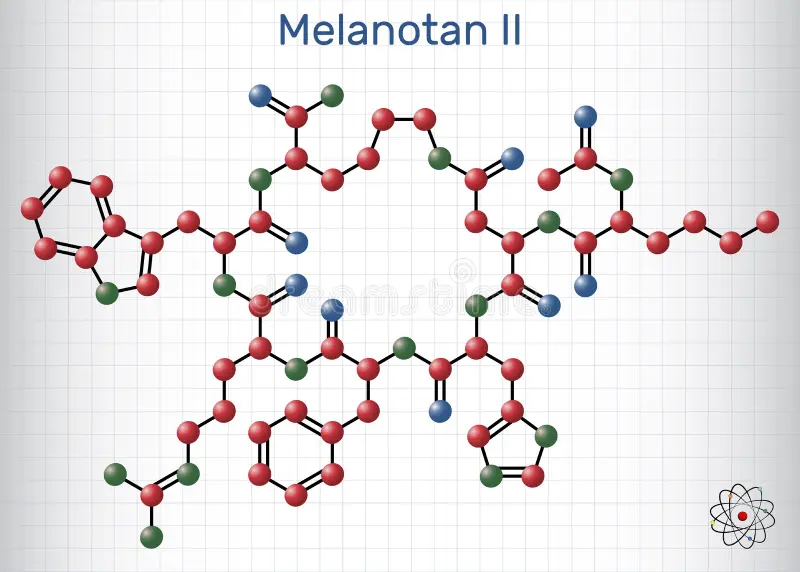
Идентификация и происхождение
- Международное непатентованное название (МНН): Меланотан II (Melanotan II), неофициально — MT-II; родственный пептидПептид — это молекула, состоящая из цепочки аминокислот, связанных между собой пептидными связями. Пептиды являются более короткими цепочками, чем белки, и обычно содержат от 2 до 50 аминокислот. Когда количество аминокислот в цепочке превышает 50, такие молекулы уже называются белками. Пептиды могут выполнять различные функции в организме, включая: Гормоны, Нейропептиды, Антибиотики, Антиоксиданты — Афродитан (Afroditan); близкий аналог — Меланотан-I (афмеланотид)
- Торговые названия: В России и ЕС официально зарегистрированные препараты на основе меланотанов отсутствуют. Экспериментальный препарат афмеланотид (Afamelanotide) продается под торговым названием Scenesse (Clinuvel Pharmaceuticals) в ЕС и США для лечения фотодерматозов
- Класс пептидов: Меланоцит-стимулирующие пептиды (аналоги α-меланоцит-стимулирующего гормона, α-МСГ)
- Аминокислотная последовательность: Ac-Nle-cyclo[Asp-His-D-Phe-Arg-Trp-Lys]-NH₂ (для Меланотана-II); для афмеланотида — [Nle⁴, D-Phe⁷]-α-МСГ (1–13)-NH₂
- Молекулярная масса: Около 1024 Да (для Меланотана-II), 1643 Да (для афмеланотида)
- Регистрационные номера: CAS 121062-08-6 (Melanotan II), INN: not assigned (Melanotan II); афмеланотид — CAS 121062-17-7, INN: afamelanotide
- Эндогенный источник в организме: Природный аналог — α-меланоцит-стимулирующий гормонГормоны — это биологически активные вещества, которые вырабатываются специализированными клетками или железами (например, эндокринными железами) и регулируют различные физиологические процессы в организме. Они действуют как химические сигналы, которые передаются через кровоток к органам и тканям, чтобы контролировать и координировать множество функций, таких как обмен веществ, рост и развитие, репродукция, настроение и многое другое. Примеры: Инсулин, Тестостерон, Эстроген, Адреналин (α-МСГ) — синтезируется в промежуточной доле гипофиза, а также в гипоталамусе и иммунных клетках
- Ген, кодирующий природный пептид: PCSK1 и PCSK2 (проконвертины, расщепляющие POMC); первичный предшественник — POMC (proopiomelanocortin)
История открытия и разработки
Меланотаны были разработаны в 1980-х годах в Университете Аризоны как синтетические аналоги α-меланоцит-стимулирующего гормона (α-МСГ) с целью создания защитного средства от ультрафиолетового излучения. Основная цель — стимуляция выработки меланина в коже без необходимости длительного пребывания на солнце. Первоначально исследования велись в контексте профилактики меланомы. Меланотан-I (афмеланотид) был более селективным, но слабым по эффекту, тогда как Меланотан-II оказался мощнее, но менее избирательным в отношении рецепторов.
В 2011 году афмеланотид (Scenesse) получил одобрение EMA для лечения эритропоэтического протопорфирии (EPP) — редкого фотодерматоза, при котором ультрафиолет вызывает болевой фототоксический ответ. В США препарат одобрен FDA по программе «orphan drug» для той же цели. Меланотан-II официально не зарегистрирован ни в одной стране как лекарственное средство.
Ключевые этапы исследований, одобрение регуляторами
Клинические испытания афмеланотида (NCT00573355, NCT01541045) продемонстрировали увеличение времени переносимости солнечного света у пациентов с EPP. На основании этих данных EMA одобрил Scenesse в 2014 году. FDA одобрило препарат в 2019 году для ограниченного применения.
Меланотан-II прошёл доклинические и ранние клинические фазы, но разработка остановлена из-за побочных эффектов и неселективности действия. Препарат не прошёл финальные стадии регистрации и не одобрен ни одним крупным регулятором как терапевтическое средство. Производитель Scenesse — компания Clinuvel Pharmaceuticals (Австралия).
Механизм действия
Меланотан-II — синтетический пептид, действующий как агонист меланокортиновых рецепторов (MCR), в первую очередь MC1R и MC4R. MC1R экспрессируется в меланоцитах кожи и отвечает за синтез эумеланина — тёмного пигмента, защищающего от УФ-излучения. Активация MC1R приводит к увеличению выработки меланина и ускорению его транспорта в кератиноциты.
MC4R, расположенный в гипоталамусе, участвует в регуляции аппетита, либидо и энергетического обмена. Активация этого рецептора объясняет побочные эффекты Меланотана-II, такие как повышение полового влечения и подавление аппетита.
Пептид является неселективным агонистом, что означает активацию нескольких подтипов меланокортиновых рецепторов (MC1R, MC3R, MC4R, MC5R), что определяет широкий спектр физиологических эффектов. В отличие от природного α-МСГ, Меланотан-II более устойчив к деградации, что обеспечивает более длительное действие.
Клинические показания
Основные (одобренные)
- Эритропоэтическая протопорфирия (EPP): афмеланотид одобрен в ЕС и США для уменьшения фоточувствительности у пациентов с EPP (препарат Scenesse)
Исследуемые (офф-лейбл и экспериментальные)
- Защита кожи от УФ-повреждений у лиц с высоким риском меланомы
- Лечение некоторых форм алопеции (по данным ряда доклинических исследований)
- Нарушения либидо (в частности, у женщин с гипоактивным сексуальным расстройством — исследовался как Bremelanotide, производное Меланотана-II)
- Ожирение и метаболический синдром (благодаря эффекту подавления аппетита)
Практическое применение: для чего и почему люди используют препарат
Сценарий 1: Повышенная чувствительность к солнцу
Пациент страдает от болезненной реакции на солнце, не связанной с обычным солнечным ожогом. После диагностики EPP врач предлагает терапию Scenesse — имплантируемого афмеланотида. Пациент выбирает этот препарат, потому что альтернативы (физическая изоляция от света, специальные фильтры) ограничивают качество жизни. Эффект наступает через 2–3 недели после имплантации, сопровождается постепенным потемнением кожи и повышением толерантности к УФ. Важно подчеркнуть, что препарат не заменяет солнцезащитные меры.
Сценарий 2: Желание улучшить пигментацию кожи без загара
Некоторые люди используют Меланотан-II в офф-лейбл целях для получения «здорового загара» без солнечного воздействия. Они выбирают его из-за быстрого визуального эффекта. Однако эффект не всегда равномерный (появление пятнистости, родинок), а побочные эффекты (тошнота, пигментация слизистых, доброкачественные новообразования) требуют внимания. Время наступления эффекта — от 1 до 4 недель. Реалистичное ожидание — умеренное потемнение, не сравнимое с глубоким загаром. Применение вне клинических протоколов не рекомендовано и не контролируется.
Сценарий 3: Поиск средств для повышения либидо
Некоторые пациенты (в основном мужчины) сообщают о повышении полового влечения при использовании Меланотана-II. Это связано с активацией MC4R. Однако официальных показаний по этой линии нет. Более того, для терапии сексуальных расстройств одобрен Bremelanotide (Vyleesi), который является модифицированным аналогом, но действует через схожий механизм. Самостоятельное применение Меланотана-II для этих целей связано с риском и не поддерживается клиническими данными.
Схемы дозирования
| Показание | Начальная доза | Поддерживающая доза | Максимальная доза | Кратность введения | Особенности титрования |
|---|---|---|---|---|---|
| Эритропоэтическая протопорфирия (афмеланотид) | 16 мг | 16 мг | 16 мг | 1 раз в 2 месяца | Вводится подкожно как имплант; титрование не требуется |
| Офф-лейбл (меланотан-II, исследовательское применение) | 0.25–0.5 мг | 1–2 мг | 2–3 мг/сут | Ежедневно или через день | Начинать с низкой дозы, постепенно увеличивать для минимизации тошноты и гиперпигментации |
Особенности: У пожилых пациентов коррекция дозы не требуется, но необходимо учитывать общее состояние кожи и риск пигментных изменений. При почечной или печеночной недостаточности данные ограничены; применение не рекомендовано без наблюдения врача. У женщин — возможна более выраженная пигментация, включая соски и слизистые. У мужчин — риск развития доброкачественной пигментации родинок.
Побочные эффекты
- Очень часто: Покраснение, зуд и тошнота (особенно при старте терапии Меланотаном-II)
- Часто: Потемнение кожи (включая шрамы, родинки), пигментация слизистых оболочек, усталость
- Нечасто: Повышение артериального давления, головная боль, покраснение лица (флешинг)
- Редко: Появление новых родинок, изменения существующих пигментных образований, спонтанный эректильный ответ (у мужчин)
Практические стратегии минимизации
- Для ЖКТ-пептидов: Вводить препарат вечером, натощак или через 2 часа после еды; начинать с минимальной дозы; при сильной тошноте — временно снизить дозу или перейти на двухдневный интервал
- Для гормональных: Периодически оценивать состояние пигментных образований (дерматоскопия), контролировать АД, наблюдать за изменениями либидо и настроения
- Для всех: Немедленно обратиться к врачу при появлении быстрорастущих или изменяющихся родинок, сильной гипертензии, стойкой тошноты или признаков аллергической реакции
Противопоказания и предостережения
- Абсолютные противопоказания: Меланома или анамнез меланомы, незащищённые пигментные новообразования, беременность, кормление грудью, возраст до 18 лет (кроме EPP при строгих показаниях)
- Относительные противопоказания: Склонность к гиперпигментации, артериальная гипертензия, аутоиммунные заболевания кожи
- Лекарственные взаимодействия: Возможное усиление эффектов при одновременном применении с другими фотосенсибилизирующими препаратами (например, тетрациклинами, сульфаниламидами). Не изучено взаимодействие с ингибиторами МАО и серотонинергиками, но теоретически возможно усиление серотонинового синдрома
- Особые группы: Пожилые — повышенный риск развития пигментных новообразований; беременные — отсутствие данных безопасности; дети — только по строгим показаниям (EPP)
Аналоги и сопоставимые препараты
| Препарат | Механизм действия | Частота введения | Эффективность | Профиль безопасности | Стоимость и доступность |
|---|---|---|---|---|---|
| Scenesse (афмеланотид) | Селективный агонист MC1R | 1 раз в 2 месяца (имплант) | Высокая при EPP | Более предсказуемый, меньше побочных эффектов | Высокая, доступен по рецепту в ЕС/США |
| Меланотан-II | Неселективный агонист (MC1R, MC4R и др.) | Ежедневно или через день (подкожно) | Быстрое потемнение, но неравномерное | Выше риск тошноты, пигментации, либидо-эффектов | Низкая (в неофициальном сегменте), но нелегальная |
| Bremelanotide (Vyleesi) | Агонист MC4R (для либидо) | По необходимости (до полового акта) | Умеренная эффективность при гипоактивном либидо у женщин | Тошнота — частый побочный эффект | Высокая, одобрен в США |
| Природный α-МСГ | Эндогенный лиганд MC1R/MC4R | Не применяется системно | Кратковременный эффект | Низкий риск, но нестабилен | Не доступен как препарат |
Питание и образ жизни на фоне препарата
Для меланоцит-стимулирующих пептидов: Несмотря на повышение пигментации, защита от УФ-излучения остаётся необходимой. Рекомендуется использование солнцезащитных средств, головных уборов и ограничение пребывания на солнце в пиковые часы. Питание не требует специальных ограничений, но важно поддерживать достаточное потребление антиоксидантов (витамины C, E, селен) для защиты кожи.
Универсальные рекомендации: Поддержание гидратации, полноценный сон (7–9 часов), минимизация стресса — важные факторы для общего состояния кожи и иммунной функции. Избегание табака и чрезмерного ультрафиолета (включая солярии) критически важно.
Сохранение результата после отмены
После прекращения применения меланотанов пигментация кожи постепенно регрессирует в течение нескольких месяцев, в зависимости от индивидуальной скорости обновления эпидермиса и уровня УФ-экспозиции. У пациентов с EPP возвращается высокая чувствительность к свету, поэтому терапия носит хронический характер.
Стратегии поддержания результата включают:
- Умеренное пребывание на солнце для поддержания пигментации (с защитой)
- Закрепление привычек фотозащиты
- При EPP — регулярное повторное введение имплантов
Пожизненный приём требуется только при хронических состояниях, таких как EPP. При офф-лейбл использовании эффекты обратимы, но не гарантируют защиту от УФ-повреждений после отмены.
Мифы и заблуждения
- «Меланотан защищает от рака кожи»
Опровержение: Несмотря на увеличение меланина, препарат не обеспечивает полной фотозащиты. УФ-повреждение ДНК может происходить даже при загаре. Использование меланотана не заменяет солнцезащитные меры и не предотвращает меланому. - «Пигментация от меланотана — это здоровый загар»
Опровержение: Потемнение вызвано фармакологической стимуляцией, а не адаптацией кожи. Оно может быть неравномерным, сопровождаться появлением новых родинок и требует дерматологического контроля. - «Меланотан безопасен, потому что он пептид»
Опровержение: Все пептиды, воздействующие на рецепторы, могут вызывать системные эффекты. Неселективность Меланотана-II, отсутствие контроля за качеством в неофициальных источниках и риск мутации пигментных клеток делают его применение потенциально опасным. - «Можно использовать вместо солярия без риска»
Опровержение: Сочетание меланотана и УФ-облучения может усиливать повреждение кожи. Некоторые пользователи ошибочно полагают, что пигментация даёт полную защиту, что повышает риск хронического УФ-воздействия.
Длительное применение: безопасно ли годы?
Данные о многолетнем применении ограничены. В клинических исследованиях Scenesse использовался до 5 лет у пациентов с EPP с приемлемым профилем безопасности. Однако долгосрочные эффекты хронической стимуляции меланокортиновых рецепторов, особенно при использовании неселективных агонистов, остаются недостаточно изученными.
Рекомендации по мониторингу:
- Анализы: Регулярная дерматоскопия (каждые 6–12 месяцев), контроль АД, оценка либидо и психоэмоционального состояния
- Периодичность: Дерматолог — раз в 6–12 месяцев; терапевт — ежегодно
- Признаки для коррекции: Быстрый рост родинок, изменение их структуры, стойкая гипертензия, выраженная тошнота, нарушения сна или настроения
При выявлении предраковых изменений или прогрессирующей пигментации препарат должен быть отменён.
Заключение
Меланоцит-стимулирующие пептиды, такие как афмеланотид и Меланотан-II, представляют собой фармакологические инструменты для модуляции пигментации и, опосредованно, фотозащиты. Единственный одобренный препарат — Scenesse — занимает узкое, но важное место в терапии редких фотодерматозов. Офф-лейбл использование меланотанов сопряжено с рисками и не поддерживается доказательной базой.
В терапевтической лестнице меланотаны не являются первой линией для косметической пигментации или профилактики меланомы. Их применение требует строгого врачебного контроля, особенно у пациентов с факторами риска рака кожи. Перспективы развития класса связаны с созданием более селективных агонистов MC1R и изучением их роли в регенерации кожи и иммунной модуляции. Тем не менее, безопасность и этика долгосрочного применения остаются предметом научной дискуссии.