VLDL – Very low-density lipoproteins) – role in the body, norms and deviations
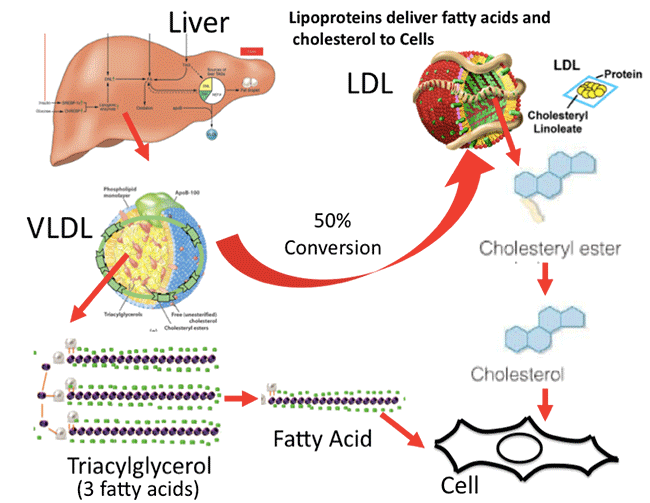
VLDL (VLDL) is a particle synthesized in the liver that transports triglycerides (TG) from the liver to tissues. They play a key role in fat metabolism, but their excess contributes to the development of atherosclerosis.
VLDL functions in the body
- Triglyceride Transport -VLDL delivers TG to muscle (for energy) and adipose tissue (for storage).
- Precursor of LDL (‘bad cholesterol’) – after the release of triglycerides, VLDL is converted to LDL.
- Participation in metabolism – when VLDL breaks down, free fatty acids are released, which are used as an energy source.
Norm of VLDL in the blood
Direct measurement of VLDL is difficult, so their level is usually calculated by triglycerides:
VLDL (mmol / L) = TG ÷ 2.2
- Normal level: 0.26-1.04 mmol / L (or 10-40 mg / dl)
- Borderline: 1.04-1.5 mmol / l
- High: >1.5 mmol / l (increases the risk of atherosclerosis)
Note: In some laboratories, VLDL is not indicated separately, but is evaluated by the level of triglycerides (norm: <1.7 mmol/l).
Causes and consequences of elevated VLDL
Causes of ↑ VLDL:
- Obesity and metabolic syndrome – excess fat in food.
- Type 2 diabetes mellitus -insulin resistance increases the synthesis of TG.
- Hypothyroidism – slowing down of lipid metabolism.
- Chronic kidney disease is a violation of fat excretion.
- Genetic disorders (familial hypertriglyceridemia).
- Alcoholism -increases the production of TG in the liver.
- Taking medications (corticosteroids, retinoids, beta blockers).
Symptoms and complications:
- Atherosclerosis – VLDL penetrates the walls of blood vessels, forming plaques.
- Pancreatitis – with a very high level of TG (>5.6 mmol / l).
- Fatty liver disease– due to the accumulation of TG.
- Xanthomas are fat deposits on the skin (eyelids, elbows).
Low VLDL: causes and consequences
Causes of ↓ VLDL:
- Fasting or an extremely low-fat diet.
- Hyperthyroidism – accelerated fat metabolism.
- Taking statins and fibrates.
- Rare genetic diseases (abetalipoproteinemia).
Symptoms:
- Energy depletion – lack of triglycerides to nourish the muscles.
- Deficiency of fat-soluble vitamins (A, D, E, K) – because VLDL is involved in their transport.
Diagnosis and treatment
Analyzes:
- Lipidogram -includes: VLDL (or calculated by TG), LDL, HDL, total cholesterol.
- Additionally:
- Blood glucose (exclude diabetes).
- TSH (check the thyroid gland).
- Liver tests (ALT, AST).
Treatment for high VLDL:
- Diet: Limit sugar, alcohol, and trans fats. Increased fiber (vegetables, oatmeal).
- Medication:
- Fibrates (Fenofibrate) – reduce TG by 30-50%.
- Omega-3 (EPA/DHA) – in high doses (2-4 g / day).
- Statins – if LDL is also elevated.
- Physical activity – 150 min / week (walking, swimming).
With low VLDL:
- Nutrition correction (healthy fats: nuts, avocados, fish).
- Treatment of the underlying disease (for example, hyperthyroidism).
Examples of indicators
| VLDL Level | Interpretation |
|---|---|
| <0.78 mmol/L | Normal |
| 0.78–1.04 mmol/L | Borderline |
| >1.04 mmol/L | High Risk of Atherosclerosis |
Important: VLDL is not the only marker of risk. Evaluate the entire lipid profile (LDL, HDL) along with the clinical picture.