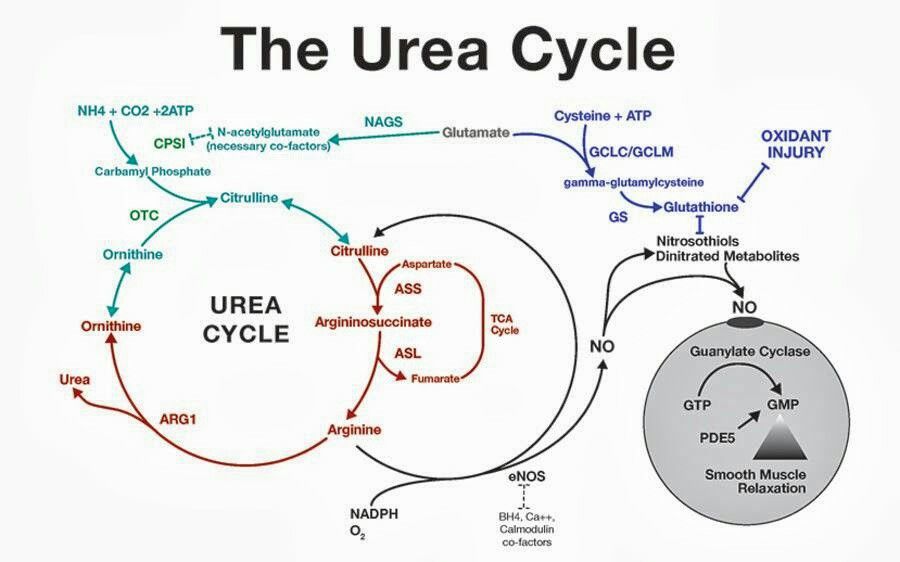
Urea in the biochemical analysis of blood
Urea is the end product of protein and amino acid breakdown, produced in the liver and excreted by the kidneys. Its level reflects:
- Kidney function (the main marker of nitrogen metabolism).
- Protein balance (nutrition, tissue breakdown).
- Liver function (urea synthesis).
Norm of urea in the blood
| Category | Reference Values (mmol/L) |
|---|---|
| Adults | 2.5–8.3 |
| Elderly | Up to 10.0 (age-related decline in kidney function) |
| Children | 1.4–6.4 (lower due to active growth) |
| Pregnant Women | Decreased by 10–20% (physiological hemodilution) |
Note:
- Standards may vary depending on the laboratory.
- Men have slightly higher urea levels than women (due to their greater muscle mass).
Deviations from the norm
1. Increased urea (uremia, azotemia)
Reasons:
- Kidney failure (acute or chronic).
- Dehydration (vomiting, diarrhea, lack of drinking).
- High-protein diet (meat, sports nutrition).
- Massive tissue breakdown (burns, injuries, tumors).
- Difficulty in the outflow of urine (stones, prostate adenoma).
Symptoms of excess:
- Weakness, fatigue (intoxication with nitrogenous substances).
- Nausea, vomiting (gastrointestinal irritation).
- Itching of the skin(urea deposits in the skin).
- The smell of urine from the mouth (uremic ‘aroma’).
- Edema, decreased urine volume (in case of renal failure).
How dangerous is it?
- Uremic coma with critical elevation (> 50 mmol / l).
- Damage to the heart, nervous system (due to toxins).
2. Reduced urea
Reasons:
- Fasting, low-protein diet (veganism, anorexia).
- Severe liver diseases (cirrhosis, hepatitis – urea synthesis is impaired).
- Hyperhydration (excess water in the body).
- Pregnancy (physiological dilution of blood).
Symptoms of deficiency:
- Weakness, loss of muscle mass (lack of protein).
- Edema (with hypoproteinemia).
- Jaundice, ascites (with liver failure).
How dangerous is it?
- Hypoproteinemia → reduced oncotic pressure → edema.
- Hepatic encephalopathy (with cirrhosis-ammonia does not turn into urea).
Additional tests
To clarify the diagnosis, prescribe:
- Creatinine (a more accurate marker of renal function).
- GFR (glomerular filtration rate).
- Liver tests (ALT, AST, bilirubin).
- Electrolytes (potassium, sodium).
What should I do if there are deviations?
If urea is elevated:
- Heavy drinking (if there is no kidney failure).
- Reduction of protein in the diet (on the recommendation of a nephrologist).
- Treatment of the underlying disease (hemodialysis for CRF).
If urea is low:
- Correction of nutrition (sufficient amount of protein).
- Treatment of the liver (for cirrhosis).
Important!
Urea is a secondary marker of renal function. A more accurate indicator is creatinine and GFR.
Consultation with a doctor (nephrologist, hepatologist, therapist) is mandatory!