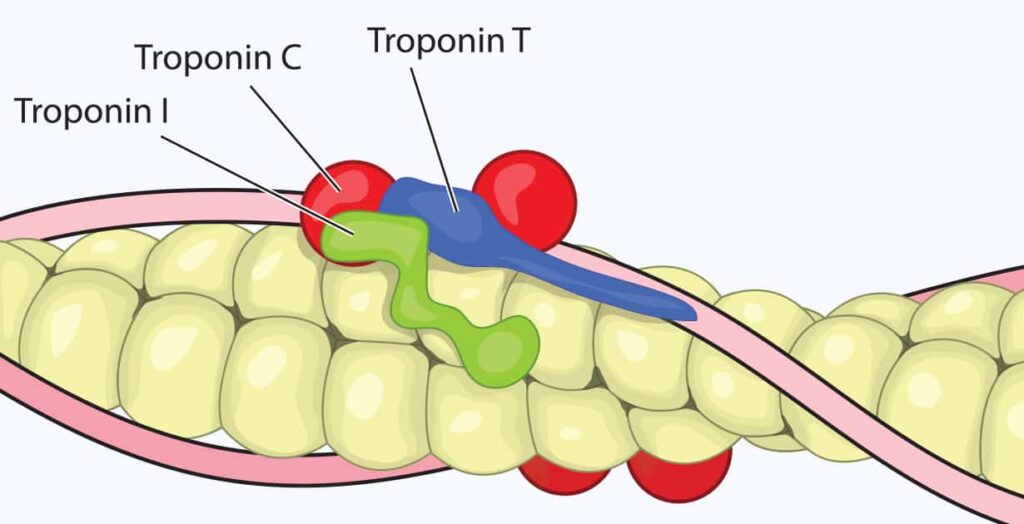
The role of troponin I (highly sensitive) in the body
Troponin I (cTnI) is a key biomarker of myocardial damageand is part of the contractile system of the heart muscle. Normally, it is practically not detected in the blood.
Main functions:
- Regulation of muscle contraction (together with troponin T and C)
- Specific marker of cardiomyocyte necrosis
- Diagnosis of myocardial infarction (highly sensitive method detects even microinfarcts)
Norm of troponin I (highly sensitive) in the blood
| Parameter | Value |
|---|---|
| Healthy adults | <0.04 ng/mL |
| Myocardial infarction threshold | >0.5 ng/mL (with rising trend) |
| “Grey zone” | 0.04–0.5 ng/mL (repeat testing required in 3–6 hours) |
Note: References depend on the analysis method. In the elderly, a slight increase is acceptable (up to 0.1 ng / ml).
Reduced Troponin I
Situations:
- Normal condition (no blood or trace amounts)
- False-low result (sample hemolysis)
It has no clinical significance.
Increased Troponin I
Critical level:
- > 0.5 ng / ml with a 2-fold increase in repeated measurement-heart attack diagnosis
Main reasons:
- Acute coronary syndrome (infarction, unstable angina)
- Myocarditis
- PE (pulmonary embolism)
- Heart injury (contusion, surgery)
- CRF (chronic renal failure)
Symptoms:
- Pressing pain behind the sternum (>15 min)
- Shortnessof breath, cold sweat
- Nausea/vomiting
- Rhythm disorders
- Loss of consciousness (with a massive heart attack)
What should I do if there are deviations?
- At the level of > 0.5 ng / ml:
- Urgent ECG
- Control after 3-6 hours (evaluate the dynamics)
- Hospitalization in a cardiac hospital
- In the ‘gray zone’ (0.04-0.5 ng / ml):
- Exclude: myocarditis, PE, sepsis
- Optional: Echocardiography, coronary angiography
Important:
- Highly sensitive troponin detects myocardial damage as early as 1-3 hours after the onset of symptoms!
- A false positive result is possible with: hemolysis, kidney failure, muscle injury.