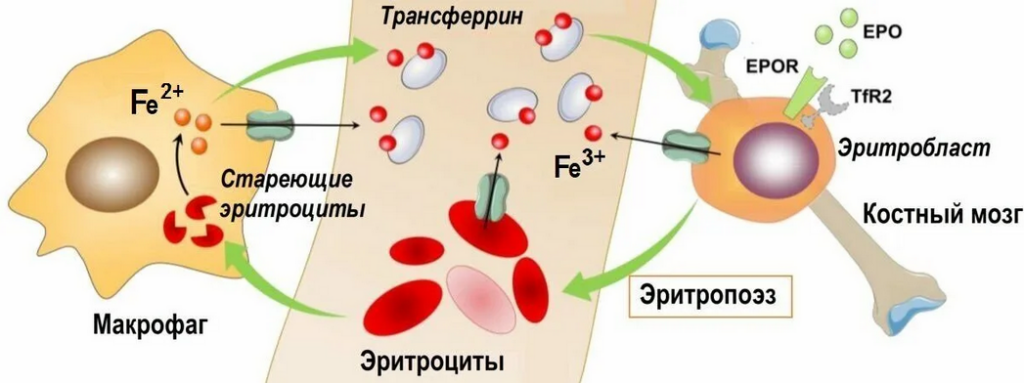
Transferrin Iron Saturation Ratio (HTF)

Transferrin Saturation (TSAT)

TSAT (or transferrin saturation %) is a parameter that reflects the proportion of transferrin (the iron-transport protein) currently bound to iron. It helps assess body iron stores and is used to diagnose anemias, iron overload, and other iron metabolism disorders.


1. Role of Parameters in Iron Metabolism

ParameterFunction
Serum ironAmount of free Fe³⁺ in plasma (a labile parameter).
TransferrinProtein that transports iron to tissues (primarily to bone marrow).
TSATPercentage of transferrin bound to iron. Reflects iron availability for erythropoiesis.

How Is TSAT Calculated?

[
TSAT (\%) = \frac{\text{Serum iron}}{\text{Total iron-binding capacity (TIBC)}} \times 100
]
TIBC ≈ 2 × transferrin level


2. Reference Ranges in Blood Tests

ParameterReference Range
Serum iron♂ 12–30 µmol/L, ♀ 9–27 µmol/L
Transferrin2.0–3.8 g/L (or 1.7–3.4 g/L depending on lab)
TSAT15–50% (optimal: 25–35%)

Note:

  • Iron levels and TSAT are typically lower in women due to menstruation.
  • Children have higher normal values (TSAT up to 45%).

3. Abnormal Results: Causes and Symptoms

A. Low TSAT (<15%) – Iron Deficiency

Causes:

  • Iron-deficiency anemia (inadequate dietary intake, blood loss).
  • Chronic inflammation (e.g., rheumatoid arthritis, infections) – iron is sequestered in macrophages.
  • Pregnancy – increased iron demand.

Symptoms:

  • Fatigue, dizziness.
  • Pale skin, brittle nails.
  • Shortness of breath on exertion.
  • Pica (craving for ice, chalk, or clay).

Laboratory findings:

  • ↓ Serum iron.
  • ↑ Transferrin (the body attempts to bind more iron).
  • ↓ Ferritin (<30 µg/L).

B. High TSAT (>50%) – Iron Overload

Causes:

  • Hemochromatosis (hereditary iron accumulation).
  • Frequent blood transfusions (e.g., in thalassemia, other anemias).
  • Iron poisoning (iron supplement overdose).
  • Hemolytic anemias (erythrocyte breakdown releases iron).

Symptoms:

  • Fatigue, joint pain.
  • Bronze skin pigmentation (in hemochromatosis).
  • Hepatomegaly, cirrhosis.
  • Diabetes mellitus (“bronze diabetes”).

Laboratory findings:

  • ↑ Serum iron.
  • ↓ Transferrin (synthesis suppressed due to iron excess).
  • ↑ Ferritin (>300 µg/L).

4. Diagnosis and Management

Tests:

  1. Complete blood count (hemoglobin, erythrocytes).
  2. Biochemistry panel:
  • Serum iron, TIBC, TSAT.
  • Ferritin (reflects iron stores).
  1. Genetic testing (if hemochromatosis suspected – HFE gene mutation).

Treatment:

  • For deficiency:
  • Iron supplements (Ferretab, Sorbifer) + vitamin C.
  • Diet rich in iron (red meat, liver, buckwheat).
  • For overload:
  • Therapeutic phlebotomy (for hemochromatosis).
  • Iron chelators (Deferasirox).
  • Dietary restriction of iron and alcohol.

Examples of TSAT Interpretation

TSATSerum IronTransferrinDiagnosis
10%Iron-deficiency anemia
60%Hemochromatosis
20%NormalNormalHealthy individual

Important: TSAT is more stable than serum iron (which fluctuates throughout the day). Always interpret it alongside ferritin and the clinical context.