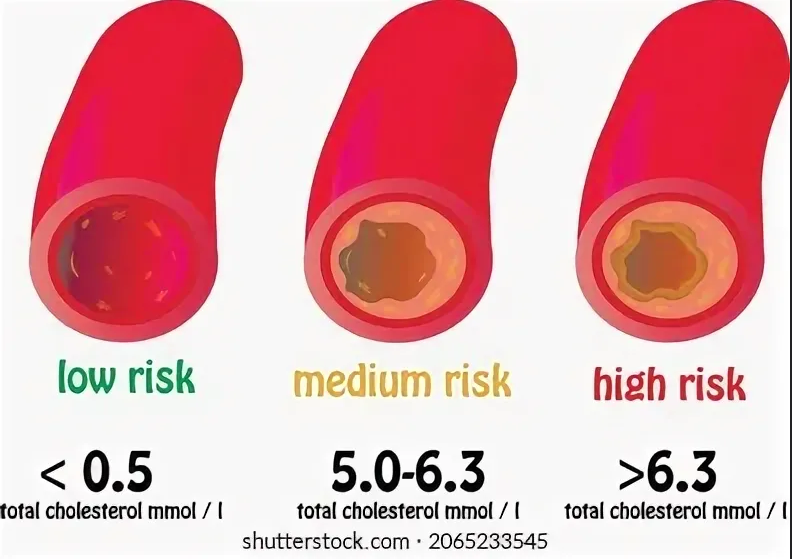
Total Cholesterol

Total Cholesterol (TCH)

Cholesterol is a fat-like substance necessary for building cell membranes, synthesizing hormones (sex hormones, cortisol), vitamin D, and bile acids. It comes from food (20-30%) and is produced by the liver (70-80%).

The total cholesterol test reflects the total amount of:

  • LDL (‘bad’ cholesterol) – transports cholesterol to tissues, promotes atherosclerosis.
  • HDL (‘good’ cholesterol) – removes excess cholesterol from the blood vessels.
  • Triglycerides are a form of fat, a source of energy.

Norms of total cholesterol in the blood

(as recommended by WHO and ESC/EAS 2021)

CategoryOptimal Level (mmol/L)
Healthy Adults< 5.2
With Cardiovascular Risks< 4.5
Children2.9–5.2

Note:

  • In women, cholesterol is usually lower until menopause, then rises.
  • During pregnancy, cholesterol increases (physiological norm).

Deviations from the norm

1. High cholesterol (hypercholesterolemia)

Reasons:

  • An unbalanced diet (excess saturated fat, trans fat).
  • Hypodynamia (sedentary lifestyle).
  • Obesity, metabolic syndrome.
  • Genetic disorders (familial hypercholesterolemia).
  • Concomitant diseases: hypothyroidism, diabetes, liver and kidney diseases.

Symptoms of excess:

  • It is asymptomatic for a long time!
  • Xanthomas are yellowish fatty plaques on the skin (eyelids, elbows, tendons).
  • Xanthelasma – deposits of cholesterol on the eyelids.
  • Early atherosclerosis – chest pain (angina pectoris), intermittent claudication.
  • Heart attacks, strokes – in severe forms at a young age.

How dangerous is it?

  • Formation of atherosclerotic plaques → vasoconstriction → organ ischemia.

2. Low cholesterol (hypocholesterolemia)

Reasons:

  • Fasting, strict diets (anorexia, bulimia).
  • Liver diseases (cirrhosis, hepatitis) – cholesterol synthesis is disrupted.
  • Hyperthyroidism (excess of thyroid hormones).
  • Hereditary disorders (abetalipoproteinemia).
  • Chronic infections, sepsis.

Symptoms of deficiency:

  • Weakness, muscular dystrophy (cholesterol is a component of cell membranes).
  • Hormonal disorders – menstrual cycle disorders, decreased libido.
  • Depression, aggression (cholesterol is involved in the synthesis of serotonin).
  • Malabsorption of fat-soluble vitamins (A, D, E, K).

How dangerous is it?

  • Increased risk of hemorrhagic stroke (due to vascular fragility).
  • Depression and cognitive impairment (decreased hormone production).

What should I do if there are deviations?

If cholesterol is elevated:

  • Diet: reduce animal fats, add vegetables, omega-3 fatty acids, and fiber.
  • Physical activity (≥150 minutes / week).
  • Weight control, quitting smoking and alcohol.
  • Medications: statins (as prescribed by your doctor).

If your cholesterol is low:

  • Diet: fatty fish, nuts, vegetable oils, eggs.
  • Treatment of the underlying disease (for example, correction of hypothyroidism).
  • Cancellation of strict diets (if the reason is in them).

Important!

Total cholesterol – only primary screening. A lipid profile is needed to accurately assess risks :

  • LDL (‘bad’) – must be < 3.0 mmol/L (for cores < 1.8).
  • HDL (‘good’) – > 1.0 mmol / L (male), > 1.2 mmol/L (female).
  • Triglycerides – < 1.7 mmol/l.

Consultation with a doctor (cardiologist, endocrinologist) is mandatory!