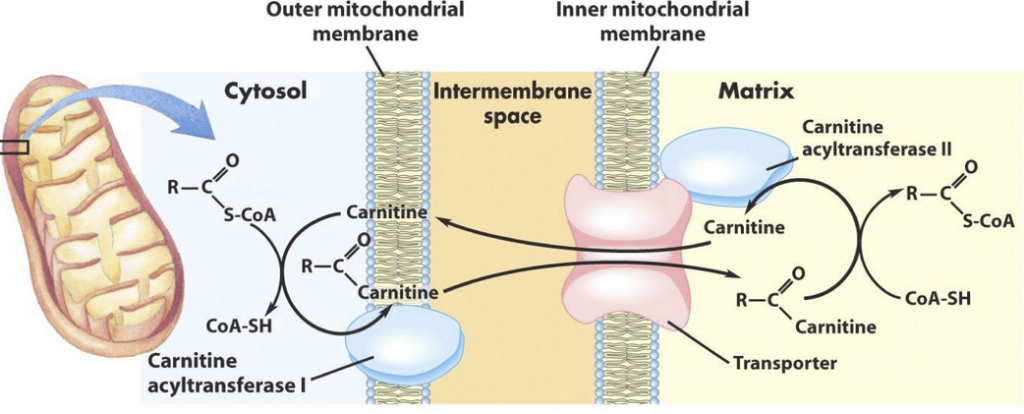
The role of carnitine in the body
Carnitine , an amino acid-like compound critical for energy metabolism. , comes in two forms::
- Free carnitine (L-carnitine) is a biologically active form
- Acylcarnitine (associated with fatty acids)
Main functions:
- Transport of fatty acids to mitochondria for energy production (β-oxidation)
- Detoxification (elimination of excess organic acids)
- Heart and muscle support
- Participation in spermatogenesis
Norm of carnitine in the blood
| Parameter | Reference range (µmol/L) |
|---|---|
| Total carnitine | 40–60 |
| Free carnitine | 35–55 |
| Acylcarnitine | 5–15 |
| Ratio (acyl/free) | <0.4 |
Note: In children, the levels are 10-20% higher.
Carnitine deficiency
Reasons:
- Primary deficiency (genetic defects of transport)
- Secondary deficiency (strict diet, liver/kidney diseases)
- Taking valproate (an anticonvulsant drug)
Symptoms:
- Muscle weakness
- Hypoglycemia
- Cardiomyopathy
- Developmental delay in children
- Increased fatigue
Excess Carnitine
Reasons:
- Overdose of L-Carnitine supplements
- Kidney failure
- Metabolic disorders
Symptoms:
- Nausea, diarrhea
- Fishy body odor (trimethylaminuria)
- Arrhythmias
- Muscle spasms
What should I do if there are deviations?
If there is a shortage:
- Urinalysis for organic acids
- Genetic testing (for primary forms)
- L-Carnitine supplements (50-100 mg / kg / day for children)
If there is an excess:
- Cancellation of supplements
- Low Carnitine diet (less red meat)
- Hemodialysis (at critical levels)
Important:
- Vegetarians have 10-25% lower carnitine levels (normal in the absence of symptoms).
- Taking 2500-5000 mg/day supplements may cause side effects
Example of interpretation:
Note for athletes: Additional carnitine supplementation has not been shown to be effective in improving results in healthy individuals!