
The role of free T4 (thyroxine) in the body
T4 free (FT4) is an inactive form of thyroid hormone produced by the thyroid gland. . It serves as the main ‘reserve’ from which active T3 (triiodothyronine) is formed in the tissues.
Key features:
- Metabolism:
- Regulates basal metabolic rate(the rate at which calories are burned at rest).
- It affects the synthesis and breakdown of proteinsProteins are high-molecular organic substances consisting of alpha-amino acids linked in a chain by a peptide bond. In living organisms, the amino acid composition of proteins is determined by the genetic code. During synthesis, 20 standard amino acids are used in most cases. Many combinations of them determine the great diversity of properties of protein molecules. Proteins play a key role in the immune response and can perform transport, storage, catalytic, structural, and receptor functions. Proteins are an important part of the nutrition of animals and humans. The main sources of proteins are meat, poultry, fish, milk, nuts, legumes, and grains., fats, and carbohydrates.
- Energy balance:
- Supports body temperature and energy production.
- Cardiovascular system:
- Increases your heart rate (HR) and sensitivity to adrenaline.
- The nervous system:
- Provides normal brainfunction, concentration and memory.
- Growth and development (in children):
- It is critically important for the formation of the central nervous system and bone system.
- Reproductive health:
- It affects women’s menstrual cycle and fertility.
Symptoms of free T4 deficiency (hypothyroidism)
Reasons:
- Autoimmune thyroiditis (Hashimoto’s disease).
- Iodine deficiency (endemic goiter).
- Surgery/radiation of the thyroid gland.
- Hypopituitarism (TSH deficiency due to pituitary gland problems).
Symptoms:
- Chronic fatigue, drowsiness, weakness.
- Chilliness, cold intolerance.
- Weight gain (swelling, slow metabolism).
- Dry skin, brittle hair and nails.
- Slow heart rate (bradycardia), low blood pressure.
- Constipation, bloating.
- Depression, memory loss, ‘fog in the head’.
- Cycle disorders in women, infertility.
Symptoms of excess free T4 (hyperthyroidism)
Reasons:
- Graves ‘ disease (autoimmune hyperthyroidism).
- Toxic nodular goiter.
- Thyroiditis (inflammation with the release of hormonesHormones are biologically active substances that are produced by specialized cells or glands (such as endocrine glands) and regulate various physiological processes in the body. They act as chemical signals that are transmitted through the bloodstream to organs and tissues to control and coordinate a wide range of functions, including metabolism, growth and development, reproduction, mood, and more. Examples include insulin, testosterone, estrogen, and adrenaline.).
- Overdose of L-thyroxine.
Symptoms:
- Sharp weight loss(with increased appetite).
- Tachycardia, arrhythmia, sweating.
- Trembling hands, nervousness, insomnia.
- Diarrhea, frequent urination.
- Muscle weakness (especially in the shoulders and thighs).
- Exophthalmos (bug-eye in Graves ‘ disease).
- Violation of the menstrual cycle.
Norm of free T4 in the blood test
Reference values depend on the laboratory, but on average:
| Group | FT4 (pmol / L) | FT4 (ng / dl)* |
|---|---|---|
| Adults | 12–22 | 0.9–1.7 |
| Children | See age limits | — |
| Pregnant women | Lower than normal (due to the growth of binding proteins) | — |
* Translation: 1 pmol / l ≈ 0.078 ng / dl
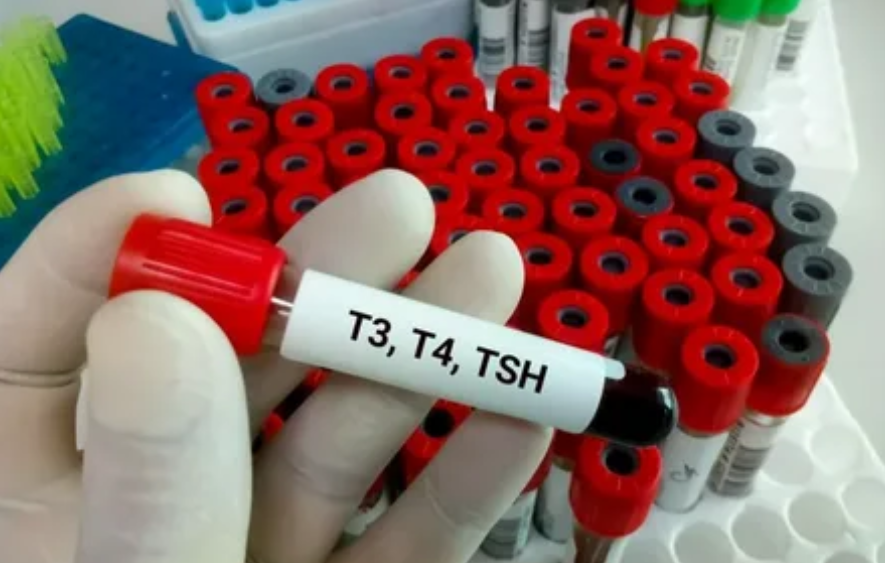
Important:
- TSH level is the main marker for diagnosis (in hypothyroidism TSH ↑, in hyperthyroidism TSH ↓).
- T4 free is more accurate than total T4 (does not depend on the level of blood proteins).
What should I do if there are deviations?
If T4 is lowered:
- Check TSH (if TSH is high – primary hypothyroidism).
- Pass antibodies to TPO and TG (if Hashimoto’s is suspected).
- Replacement therapy with L-thyroxine (the dose is selected by the endocrinologist).
If T4 is raised:
- Ultrasound of the thyroid gland (exclude nodules, inflammation).
- Analysis for TSH receptor antibodies (TRAb) in Graves ‘ disease.
- Treatment: thyrostatics (thiamazole), radioactive iodine, surgery.
Conclusion
- Free T4 is the main ‘prohormone’ from which active T3 is formed.
- Deficiency leads to a slower metabolism (hypothyroidism).
- Excess causes acceleration of all processes (thyrotoxicosis).
- The FT4 norm is 12-22 pmol / L, but you need to interpret it together with TSH.