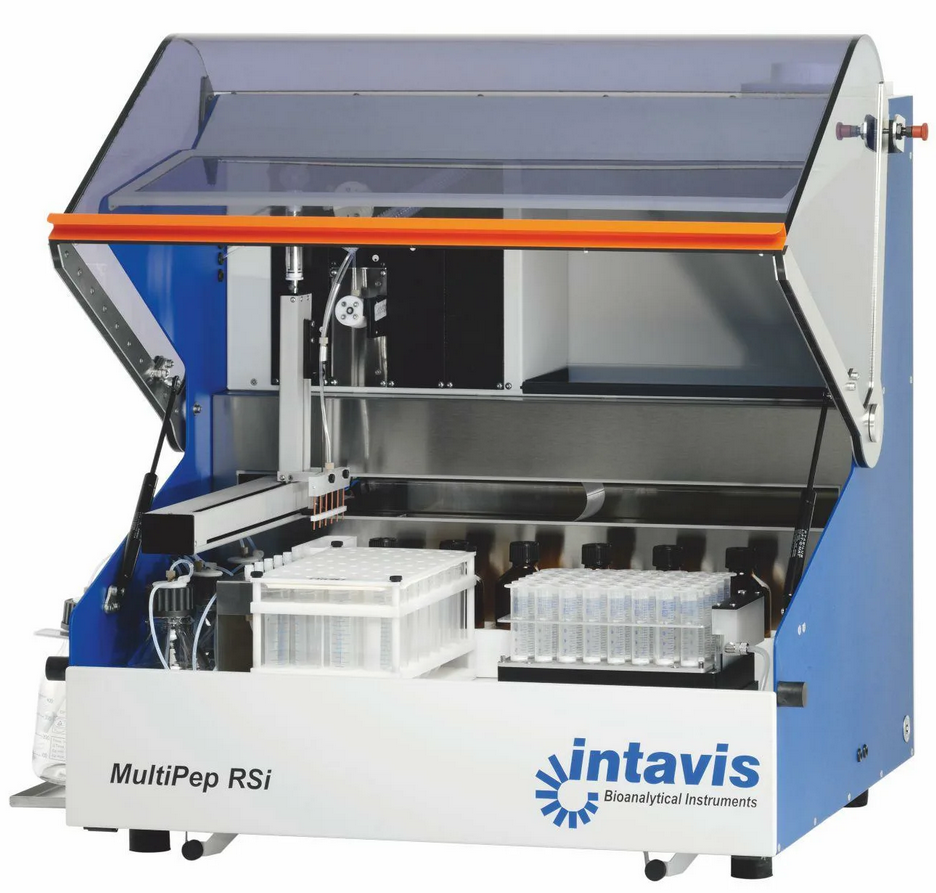
Solid-phase peptideA peptide is a molecule consisting of a chain of amino acids linked together by peptide bonds. Peptides are shorter chains than proteins and usually contain from 2 to 50 amino acids. When the number of amino acids in a chain exceeds 50, such molecules are called proteins. Peptides can perform various functions in the body, including: Hormones, Neuropeptides, Antibiotics, Antioxidants synthesis is a major breakthrough in the chemistry of peptide synthesis. Its most important feature is that there is no need to purify intermediates, and the synthesis process can be carried out continuously. Currently, the synthesis of peptides consists almost entirely of solid-phase synthesis.
Solid-phase peptide synthesis is a method of producing synthetic peptides in the laboratory. It allows rapid assembly of the peptide chain through sequential reactions of amino acid derivatives on a macroscopically solvent-insoluble polymer substrate.
The solid base consists of small balls of polymer resin functionalized with reactive groups (such as amine or hydroxyl groups) that connect to the nascent peptide chain.
Since the peptide remains covalently attached to the carrier throughout the synthesis, excess reagents and by-products can be removed by washing and filtration. This approach avoids the relatively time-consuming isolation of the peptide product from solution after each step of the reaction, which would be required with conventional synthesis in the solution phase.
The general procedure of solid-phase synthesis is one of repeated cycles of alternately removing protection from the N-terminus and binding reactions. The resin can be washed between each step.
In solid-phase synthesis, mechanisms for protecting reaction centers are also used, but this is done not individually, for each monomer, but directly during the synthesis process, while increasing the length of the molecular chain.