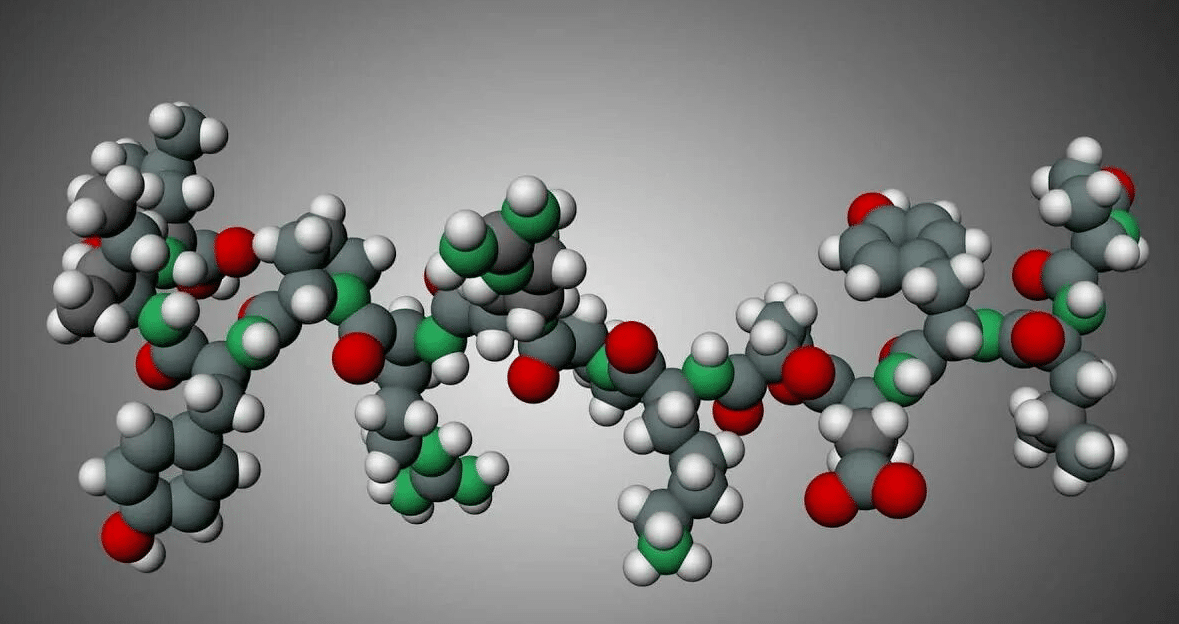
Amino Acid Size
The average molecular weight (based on the weight of a hydrogen atom equal to 1) of each amino acid is approximately 100 to 125 daltons.
Peptide Size
The size of the
peptideA peptide is a molecule consisting of a chain of amino acids linked together by peptide bonds. Peptides are shorter chains than proteins and usually contain from 2 to 50 amino acids. When the number of amino acids in a chain exceeds 50, such molecules are called proteins. Peptides can perform various functions in the body, including: Hormones, Neuropeptides, Antibiotics, Antioxidants plays an important role in its ability to penetrate the skin. In general, peptides
up to 500 daltons (Da)in size they can penetrate the upper layers of the skin, such as the epidermis.
However, for the peptide to enter the deeper layers of the dermis or the bloodstream, it must be small enough and sufficiently lipophilic (i.e., fat-soluble).
-
- Molecules up to 500 daltons in size often penetrate the top layer of the skin (the stratum corneum of the epidermis), but their penetration into the dermis is limited.
-
- Peptides with a molecular weight greater than 1000 daltons (for example, larger peptides or proteinsProteins are high-molecular organic substances consisting of alpha-amino acids linked in a chain by a peptide bond. In living organisms, the amino acid composition of proteins is determined by the genetic code. During synthesis, 20 standard amino acids are used in most cases. Many combinations of them determine the great diversity of properties of protein molecules. Proteins play a key role in the immune response and can perform transport, storage, catalytic, structural, and receptor functions. Proteins are an important part of the nutrition of animals and humans. The main sources of proteins are meat, poultry, fish, milk, nuts, legumes, and grains.) often do not penetrate deep into the skin and remain in the upper layers of the epidermis, not reaching the dermis.
Thus, peptides up to 500 Da in size can penetrate the skin and have effects such as moisturizing, stimulating collagen synthesis, and other cosmetic or therapeutic effects. Peptides of a larger mass are likely to remain on the surface or in the upper layers of the epidermis.
Protein sizes
Proteins are polymer molecules in which amino acids serve as monomers. In the composition of proteins in the human body, only 20 alpha-amino acids are found. The same amino acids are present in proteins with different structures and functions. The individuality of protein molecules is determined by the sequence of amino acids in the protein.
Amino acids are organic acids that contain one or more amino groups.
All alpha-amino acids, except for aminoacetic acid (glycine), have an asymmetric a-carbon atom and exist as two enantiomers.Almost all proteins are made up of 20 α-amino acids belonging to the K-series, with the exception of glycine.
Amino Acid Size
The average molecular weight (based on the weight of a hydrogen atom equal to 1) of each amino acid is approximately 100 to 125 daltons.
Peptide Size
The size of the peptide plays an important role in its ability to penetrate the skin. In general, peptides
up to 500 daltons (Da)in size they can penetrate the upper layers of the skin, such as the epidermis.
However, for the peptide to enter the deeper layers of the dermis or the bloodstream, it must be small enough and sufficiently lipophilic (i.e., fat-soluble).
-
- Molecules up to 500 daltons in size often penetrate the top layer of the skin (the stratum corneum of the epidermis), but their penetration into the dermis is limited.
-
- Peptides with a molecular weight greater than 1000 daltons (for example, larger peptides or proteins) often do not penetrate deep into the skin and remain in the upper layers of the epidermis, not reaching the dermis.
Thus, peptides up to 500 Da in size can penetrate the skin and have effects such as moisturizing, stimulating collagen synthesis, and other cosmetic or therapeutic effects. Peptides of a larger mass are likely to remain on the surface or in the upper layers of the epidermis.
Protein sizes
Proteins are polymer molecules in which
amino acidsAmino acids are the fundamental building blocks of proteins and play a key role in biological processes. There are a total of 22 standard amino acids used for protein synthesis in living organisms. serve as monomers. In the composition of proteins in the human body, only 20 alpha-amino acids are found. The same amino acids are present in proteins with different structures and functions. The individuality of protein molecules is determined by the sequence of amino acids in the protein.
Amino acids are organic acids that contain one or more amino groups.
All alpha-amino acids, except for aminoacetic acid (
glycineGlycine is an amino acid that regulates metabolic processes in the central nervous system. It belongs to neurotransmitters (participates in the transmission of nerve impulses). Glycine is a key component of collagen, which gives structure to bones, muscles, connective tissues, and skin. It also participates in the transmission of nerve impulses, increasing the efficiency of information transfer between neurons.), have an asymmetric a-carbon atom and exist as two enantiomers.Almost all proteins are made up of 20 α-amino acids belonging to the K-series, with the exception of glycine.