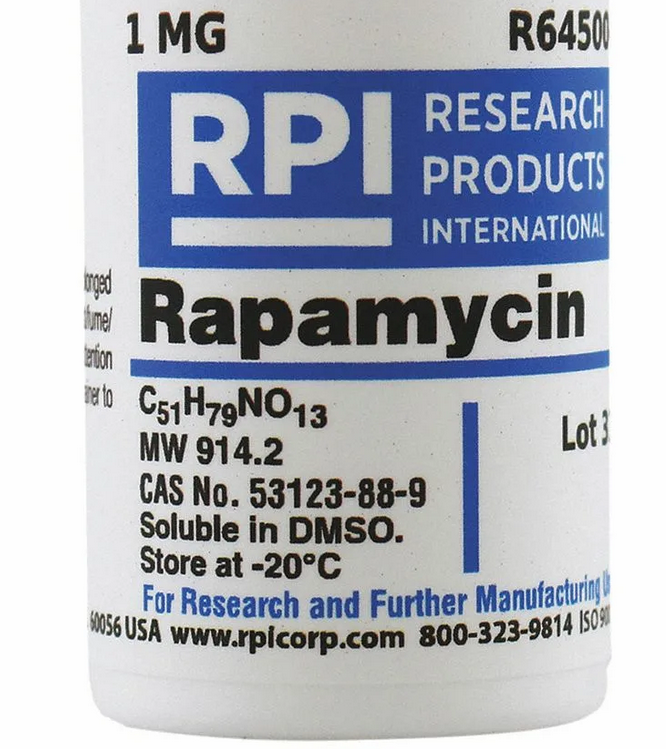
Rapamycin is a macrolide structure peptideA peptide is a molecule consisting of a chain of amino acids linked together by peptide bonds. Peptides are shorter chains than proteins and usually contain from 2 to 50 amino acids. When the number of amino acids in a chain exceeds 50, such molecules are called proteins. Peptides can perform various functions in the body, including: Hormones, Neuropeptides, Antibiotics, Antioxidants antibiotic with powerful immunosuppressive and antitumor properties. It is also known as sirolimus and is widely studied in the context of extending life and treating age-related diseases.
1. Opening history
Rapamycin was first isolated in 1972 from the bacterium Streptomyces hygroscopicus, found in the soil of Easter Island (Rapa Nui, hence the name). Initially, it was studied as an antifungal agent, but later its powerful immunosuppressive and cytostatic properties were discovered.
2. Mechanism of action
Rapamycin inhibits the mammalian target of Rapamycin — a key regulator of cell growth, division, and metabolism.
- mTOR is a protein kinase that is part of two complexes:
- mTORC1 (sensitive to rapamycin) — regulates protein synthesis, autophagy, metabolism, and aging.
- mTORC2 (less sensitive) — affects cell survival and cytoskeleton.
Rapamycin binds to FKBP12 (immunophilin), and this complex blocks mTORC1, which leads to:
- suppression of protein synthesis,
- activation of autophagy (clearing the cell of ‘garbage’),
- slowing down cellular aging,
- inhibition of cancer cell proliferationProliferation is the process of cell multiplication, increasing tissue volume. It underlies the growth and differentiation of tissues during individual development, ensures the renewal of cells and intracellular structures. Cell proliferation is a process by which a cell grows and divides to form two daughter cells..
3. Application in medicine
Immunosuppression
- Prevention of graft rejection (in combination with other drugs).
- Treatment of autoimmune diseases (for example, lupus, rheumatoid arthritis).
Oncology
- Rapamycin analogues (everolimus, temsirolimus) are used for the treatment of:
- renal cell carcinoma,
- breast cancer (HER2-positive),
- neuroendocrine tumors.
Anti-aging research
- Rapamycin prolongs life in model organisms (yeast, worms, flies, mice).
- In 2009, it was shown to increase the lifespan of mice by 9-14%.
- It is being investigated for the treatment of age-related diseases (Alzheimer’s disease, sarcopenia).
4. Side effects
- Immunosuppression → risk of infection.
- Metabolic disorders → hyperglycemia, insulin resistance.
- Impaired wound healing.
- Stomatitis, skin rashes.
5. Rapamycin and life extension
- In low doses, rapamycin can slow aging by activating autophagy and reducing inflammation.
- Human studies are still limited, but they are ongoing (for example, the PEARL project).
- Some biohackers take it orally or as a cream (but without sufficient evidence).
6. Rapamycin analogues
- Everolimus (Afinitor) – it is used in oncology.
- Temsirolimus (Torisel— – for the treatment of kidney cancer.
- Ridaforolimus is being investigated for the treatment of sarcomas.
Conclusion
Rapamycin is a unique drug with a powerful effect on the mTOR pathway, which makes it promising for the treatment of cancer, immune diseases and, possibly, life extension. However, its use requires caution due to serious side effects.