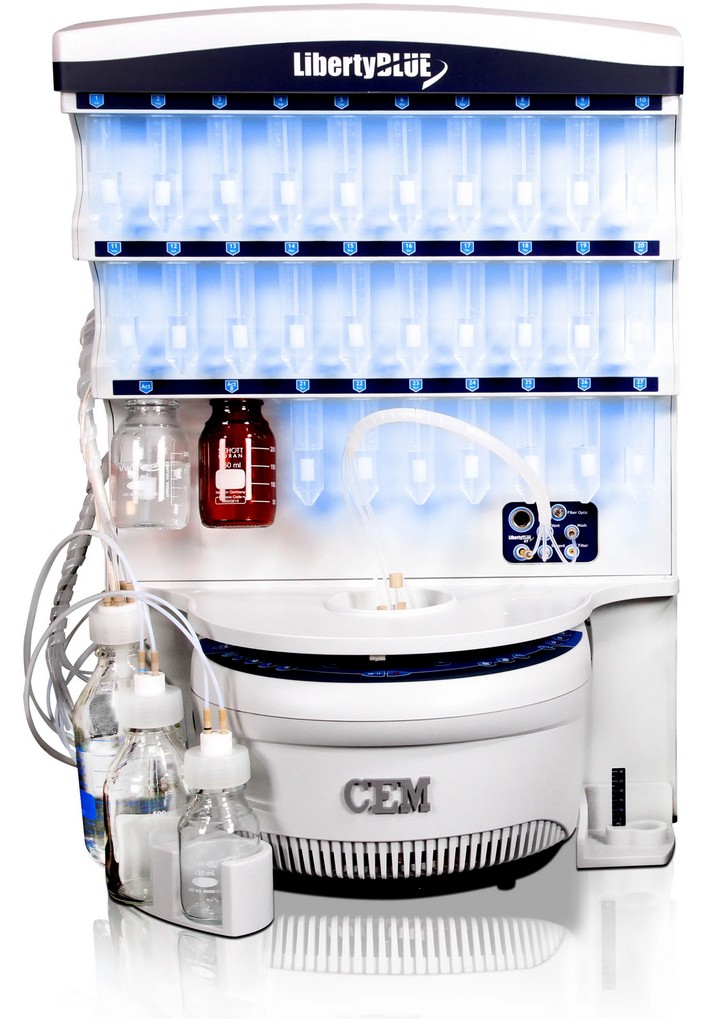
Peptides are produced using various biotechnological and chemical methods. Major peptideA peptide is a molecule consisting of a chain of amino acids linked together by peptide bonds. Peptides are shorter chains than proteins and usually contain from 2 to 50 amino acids. When the number of amino acids in a chain exceeds 50, such molecules are called proteins. Peptides can perform various functions in the body, including: Hormones, Neuropeptides, Antibiotics, Antioxidants manufacturing technologies include:
1. Solid-Phase Peptide Synthesis (SPPS)
- Description: This is the most common method of peptide synthesis. The peptide is synthesized step-by-step on a solid substrate (usually polymer resins), starting from the C-end (carboxyl end) and ending with the N-end (amino group).
- Stages:
- Activation of an amino acid.
- Attachment of an amino acid to a growing peptide chain.
- Delete security groups.
- Cleaning and washing.
- Advantages: High precision, automation capability, suitable for the synthesis of short and medium peptides (up to 50 amino acidsAmino acids are the fundamental building blocks of proteins and play a key role in biological processes. There are a total of 22 standard amino acids used for protein synthesis in living organisms.).
- Disadvantages: Limited length of the peptide, possible errors in the synthesis of long chains.
2. Liquid-Phase Peptide Synthesis (LPPS)
- Description: The peptide is synthesized in solution, not on a solid substrate. This method is used to synthesize longer peptides or complex structures.
- Advantages: Suitable for synthesis of long peptides, less chain length restrictions.
- Disadvantages: Requires more time and resources, and is more difficult to automate.
3. Recombinant technology (biosynthesis)
- Description: Peptides are produced using genetically modified microorganisms (e.g., bacteria, yeast) or cell cultures. The gene encoding the peptide is inserted into the DNA of the microorganism, which then synthesizes the peptide.
- Stages:
- Cloning of the gene encoding the peptide.
- Introduction of a gene into a microorganism.
- Cultivation of microorganisms in a bioreactor.
- Isolation and purification of the peptide.
- Advantages: Suitable for the production of long peptides and proteinsProteins are high-molecular organic substances consisting of alpha-amino acids linked in a chain by a peptide bond. In living organisms, the amino acid composition of proteins is determined by the genetic code. During synthesis, 20 standard amino acids are used in most cases. Many combinations of them determine the great diversity of properties of protein molecules. Proteins play a key role in the immune response and can perform transport, storage, catalytic, structural, and receptor functions. Proteins are an important part of the nutrition of animals and humans. The main sources of proteins are meat, poultry, fish, milk, nuts, legumes, and grains., high efficiency for large-scale production.
- Disadvantages: It requires complex equipment and control, and there may be problems with proper folding of the peptide.
4. Enzymatic synthesis
- Peptides are synthesized using enzymesEnzymes are proteins that accelerate chemical reactions in the body. They ensure the occurrence of metabolic processes such as food digestion, energy release, cell formation, and many others. that catalyze the formation of peptide bonds.
- Advantages: High specificity, environmental friendliness.
- Disadvantages: Limited applicability, high cost of enzymes.
5. Hybrid methods
- Description: A combination of chemical and biological synthesis. For example, short peptides can be synthesized chemically and then combined using enzymes or recombinant technologies.
- Advantages: Flexibility, ability to synthesize complex structures.
- Disadvantages: Complexity of the process, high cost.
6. Cleaning and analysis
After synthesis, peptides undergo purification steps (for example, using high-performance liquid chromatography — HPLC)) and analysis (mass spectrometry, NMR) to confirm purity and structure.
Application of technologies:
- Short peptides (up to 50 amino acids): Solid-phase synthesis.
- Long peptides and proteins: Recombinant technology.
- Complex peptides: Hybrid methods.
Each technology has its own advantages and limitations, and the choice of method depends on the length of the peptide, the amount required, and the complexity of the structure.