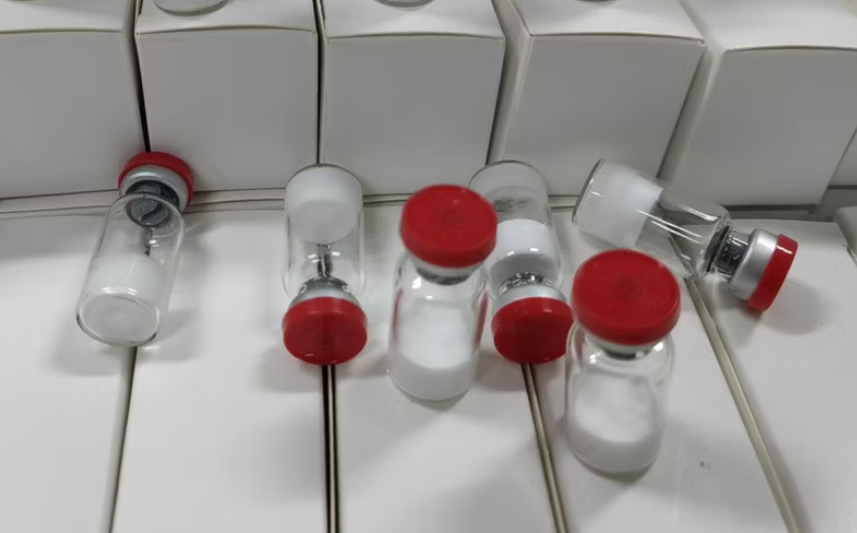
PeptideA peptide is a molecule consisting of a chain of amino acids linked together by peptide bonds. Peptides are shorter chains than proteins and usually contain from 2 to 50 amino acids. When the number of amino acids in a chain exceeds 50, such molecules are called proteins. Peptides can perform various functions in the body, including: Hormones, Neuropeptides, Antibiotics, Antioxidants B7-33 is a synthetic peptide that is actively studied in scientific research due to its potential therapeutic properties, especially in the field of cardiology. It was developed as an agonist (activator) of receptors associated with the protective mechanisms of the heart. The focus is on its ability to mimic the effects of the hormone apelin, which plays an important role in regulating the cardiovascular system.
Main Characteristics of B7-33 peptide:
Structure:
B7-33 is a short peptide consisting of amino acidsAmino acids are the fundamental building blocks of proteins and play a key role in biological processes. There are a total of 22 standard amino acids used for protein synthesis in living organisms.. Its structure is optimized for interaction with apelin receptors (APJ receptors), which are expressed in the heart and blood vessels.
Mechanism of action:
The peptide binds to APJ receptors, activating signaling pathways that help protect the heart from damage caused by ischemia (lack of blood supply) and reperfusion (restoration of blood flow after ischemia).
It improves heart muscle function, reduces oxidative stress and inflammation, and promotes the survival of cardiomyocytes (heart cells).
Therapeutic potential:
B7-33 is being studied as a potential treatment for cardiovascular diseases such as myocardial infarction, heart failure, and coronary heart disease.
It can help reduce heart damage after a heart attack and improve tissue repair.
Advantages over apelin:
Apelin is a naturally occurring peptide that is rapidly degraded in the body, which limits its therapeutic use. B7-33 has been developed to increase stability and duration of action, making it more suitable for clinical use.
Researches:
Preclinical animal studies have shown that B7-33 effectively protects the heart from ischemic-reperfusion injury.
Scientists are also exploring its potential application in other areas, such as diabetes and metabolic disorders, since APJ receptors are involved in the regulation of metabolism.
Current status:
As of October 2023, B7-33 is currently undergoing preclinical research. Further clinical trials are needed to confirm its safety and efficacy in humans.
The prospects:
Peptide B7-33 is a promising candidate for the development of new drugs aimed at the treatment of cardiovascular diseases. Its ability to protect the heart and improve its function makes it an important target for further research.
At the time of October 2023, there are not many direct studies on the effect of B7-33 peptide on liver fibrosis. However, it is possible to suggest potential mechanisms of its action based on the known data on its interaction with apelin receptors (APJ receptors) and their role in pathological processes, including fibrosis.
Possible mechanisms of B7-33 influence on liver fibrosis:
Activation of APJ receptors:
B7-33 is an agonist of APJ receptors, which are expressed in various tissues, including the liver. Activation of these receptors can modulate inflammatory and fibrogenic processes.
Apelin (a natural ligand of APJ receptors) and its analogs, such as B7-33, can have an antifibrotic effect by suppressing the activation of liver stellate cells (Ito cells), which play a key role in the development of fibrosis.
Suppressing inflammation:
Liver fibrosis often develops against the background of chronic inflammation caused by viral infections (for example, hepatitis B or C), alcoholic or non-alcoholic steatohepatitis (NASH).
B7-33 can reduce the level of pro-inflammatory cytokines (for example, TNF-α, IL-6), which helps to reduce inflammation and, as a result, slow the progression of fibrosis.
Antioxidant effect:
Oxidative stress is one of the key factors contributing to damage to hepatocytesHepatocytes are the main cells of the liver. They account for 60 to 80% of the mass of the entire organ. These are the main functional units of the liver, involved in a wide range of physiological processes such as nutrient metabolism, protein synthesis, detoxification, and bile secretion. (liver cells) and activation of fibrogenic processes.
B7-33 can reduce the level of reactive oxygen species( ROS), thereby protecting liver cells from damage and reducing the stimulation of fibrosis.
Regulation of metabolism:
APJ receptors are involved in the regulation of metabolic processes, including glucose and lipid metabolism. Metabolic disorders (such as diabetes or obesity) are often associated with the development of liver fibrosis.
B7-33 may improve the metabolic profile, which indirectly contributes to reducing the risk of fibrosis.
Inhibition of the TGF-β signaling pathway:
TGF-β (transforming growth factor beta) is a key mediator of fibrosis, stimulating the production of extracellular matrixThe extracellular matrix is a multicomponent complex of structural molecules that maintain the structural integrity of tissues. It provides an organized environment within which cells of various tissues move and interact. It binds cells into a single system, ensures the preservation and dissemination of information. It is a gel, the most important component of which is hyaluronic acid, which stimulates cell migration, has a unique ability to bind water, maintains the skin's water balance, determining its firmness and elasticity. (collagenCollagen is a fibrillar protein, one of the main building elements of the body. It constitutes a significant part of connective tissues such as skin, tendons, joints, bones, and cartilage. Collagen provides strength, elasticity, and structural integrity to these tissues, giving them the ability to resist stretching. and other proteinsProteins are high-molecular organic substances consisting of alpha-amino acids linked in a chain by a peptide bond. In living organisms, the amino acid composition of proteins is determined by the genetic code. During synthesis, 20 standard amino acids are used in most cases. Many combinations of them determine the great diversity of properties of protein molecules. Proteins play a key role in the immune response and can perform transport, storage, catalytic, structural, and receptor functions. Proteins are an important part of the nutrition of animals and humans. The main sources of proteins are meat, poultry, fish, milk, nuts, legumes, and grains.).
Activation of APJ receptors can inhibit TGF-β-dependent signaling pathways, which leads to a decrease in fibrogenesis.
Current state of research:
Most studies of B7-33 have focused on its cardioprotective properties, and data on its direct effects on the liver are still insufficient.
However, given the role of APJ receptors in the regulation of inflammation, fibrosis, and metabolism, B7-33 may be considered as a potential candidate for the treatment of liver fibrosis. Additional preclinical and clinical studies are needed to confirm this hypothesis.
The prospects:
If B7-33 is indeed effective in suppressing liver fibrosis, it may become the basis for developing new therapeutic strategies for treating diseases such as:
Non-alcoholic fatty liver disease (NAFLD),
Alcoholic liver disease,
Viral hepatitis,
Cirrhosis of the liver.
Further studies, including animal model experiments and clinical trials, are needed to better understand the effect of B7-33 on liver fibrosis.
The use of B7-33 peptide in coronary artery stenting is an interesting and promising idea that may have significant therapeutic potential. However, as of October 2023, there are no direct studies on the use of B7-33 specifically in the context of stenting. However, based on the known mechanisms of action of this peptide, it is possible to suggest how it could be useful in this area.
Potential benefits of B7-33 in coronary artery stenting:
Protection against ischemic-reperfusion injury:
Stenting of the coronary arteries is often accompanied by temporary ischemia (lack of blood supply), followed by restoration of blood flow (reperfusion). This process can cause damage to the heart muscle.
B7-33, as an APJ receptor agonist, has cardioprotective properties, reducing oxidative stress, inflammation, and apoptosis (cell death) in cardiomyocytes. This can minimize myocardial damage during and after stenting.
Reduction of inflammation and restenosis:
One of the main problems after stenting is restenosis — repeated narrowing of the artery due to inflammation and hyperproliferation of smooth muscle cells.
B7-33 can inhibit inflammation and cell proliferationProliferation is the process of cell multiplication, increasing tissue volume. It underlies the growth and differentiation of tissues during individual development, ensures the renewal of cells and intracellular structures. Cell proliferation is a process by which a cell grows and divides to form two daughter cells., potentially reducing the risk of restenosis.
Improving endothelial function:
After stent placement, it is important to quickly restore the endothelium (the inner lining of blood vessels) to prevent thrombosis and other complications.
B7-33 may improve endothelial function by activating APJ receptors, which are involved in the regulation of vascular tone and angiogenesis (formation of new vessels).
Antifibrotic effect:
After stenting, fibrosis may develop in the stent placement area, which may worsen long-term results.
B7-33, by suppressing fibrotic processes, can promote more effective tissue healing.
Reducing the risk of thrombosis:
Although B7-33 is not a direct anticoagulant, its ability to improve endothelial function and reduce inflammation may indirectly reduce the risk of blood clots.
Possible approaches to using B7-33 in stenting:
System introduction:
B7-33 can be administered intravenously before or after a stenting procedure to protect the myocardium and blood vessels from ischemic-reperfusion injury.
Combination therapy:
B7-33 can be used in combination with other medications, such as anticoagulants or antiplatelet agents, to enhance the therapeutic effect.
Current state of research:
Currently, B7-33 is studied mainly in the context of cardioprotection in ischemic-reperfusion injury. Its use in stenting requires additional research, including preclinical trials in animal models and clinical studies.
Potential limitations:
Stability and Delivery: B7-33, like many peptides, can be subject to rapid degradation in the body. Its effective use will require stabilization methods and targeted delivery.
Safety: Possible side effects and toxicity with prolonged use should be carefully studied.
Conclusion:
The use of B7-33 peptide in coronary artery stenting is a promising idea that can improve the results of the procedure by reducing myocardial damage, inflammation, and the risk of restenosis. However, more research and development is needed to implement this concept.