Parathormone

The role of parathyroid hormone (PTH) in the body

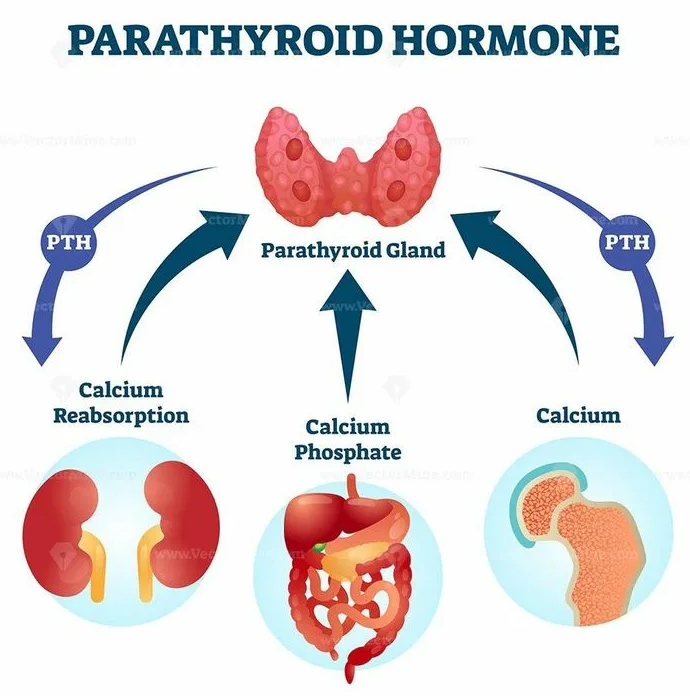
Parathyroid hormone (PTH) – a hormone produced by the parathyroid (parathyroid) glands. is the main regulator of calcium-phosphorus metabolism.

Main functions:

  1. Maintaining blood calcium levels:
  • Stimulates the release of calcium from the bones (activates osteoclasts).
  • Increases the absorption of calcium in the intestines (via vitamin D).
  • Reduces the loss of calcium in the urine (increases reabsorption in the kidneys).
  1. Phosphorus control:
  • Increases the excretion of phosphates in the urine.
  1. Effect on vitamin D:
  • Activates the conversion of vitamin D in the kidneys to its active form (calcitriol).

Symptoms of parathyroid hormone deficiency (hypoparathyroidism)

Reasons:

  • After thyroid surgery (damage to the parathyroid glands).
  • Autoimmune diseases (rare).
  • Congenital pathologies (Di Giorgi syndrome).

Symptoms:

  • Hypocalcemia (low blood calcium):
  • Convulsions, muscle spasms (especially in the hands, feet – ‘obstetrician’s hand’).
  • Paresthesia (tingling, numbness of the lips, fingers).
  • Laryngospasm (dangerous condition-suffocation).
  • Dry skin, brittle nails.
  • Cataract (in chronic hypoparathyroidism).
  • Cardiac arrhythmias (prolongation of the QT interval on the ECG).

Symptoms of an excess of parathyroid hormone (hyperparathyroidism)

Reasons:

  • Parathyroid adenoma (80% of cases).
  • Hyperplasia or cancer of the parathyroid glands (rare).
  • Secondary hyperparathyroidism (with vitamin D deficiency, chronic kidney disease).

Symptoms:

  • Hypercalcemia (high blood calcium):
  • Weakness, fatigue.
  • Thirst, frequent urination.
  • Nausea, constipation.
  • Depression, memory disorders.
  • Bone damage:
  • Osteoporosis, bone pain.
  • Pathological fractures.
  • Urolithiasis (calcium stones in the kidneys).
  • Calcification of blood vessels and soft tissues.

Norm of parathyroid hormone in the blood test

Reference values depend on the laboratory, but on average:

GroupPTH (pg / ml)PTH (pmol / L)*
Adults15–651.6–6.9
Children9–521.0–5.5

* Translation: 1 pg / ml ≈ 0.106 pmol / l

Important nuances:

  • The test is taken on an empty stomach, in the morning.
  • PTH is interpreted only together with calcium, phosphorus and vitamin D.
  • With hypercalcemia + high PTH – primary hyperparathyroidism.
  • Hypocalcemia + low PTH – hypoparathyroidism.

What should I do if there are deviations?

If PTH is elevated:

  1. Check for calcium, phosphorus, and vitamin D.
  2. Ultrasound or scintigraphy of the parathyroid glands (search for adenoma).
  3. Treatment:
  • Surgery (removal of an adenoma).
  • In secondary hyperparathyroidism-correction of vitamin D and phosphorus.

If the PTH is lowered:

  1. Introduce calcium and vitamin D (for acute hypocalcemic crisis).
  2. Lifelong therapy with calcium supplements and active forms of vitamin D (calcitriol).

Conclusion

  • PTH is the main regulator of calcium: an excess of it leads to bone destruction, and a deficiency leads to seizures.
  • The norm of PTH is 15-65 pg / ml, but its ratio with calcium is more important.
  • If you have any symptoms, see an endocrinologist immediately! Hypocalcemia and hypercalcemia are life-threatening.

Important: Do not take vitamin D or calcium without testing – this may worsen the condition!