Omega-3 Index

The role of the Omega-3 index (EPA + DHA in red blood cells) in the body

The omega-3 index is a measure of the percentage of two key fatty acids (eicosapentaenoic EPA and docosahexaenoic DHA) in the membranes of red blood cells. This is an important marker of long-term Omega-3 intake and its impact on health.

EPA and DHA functions:

  1. Cardiovascular system:
  • Reduce the level of triglycerides.
  • Reduce the risk of arrhythmias and atherosclerosis.
  • Maintain the elasticity of blood vessels.
  1. Brain and nervous system:
  • DHA is the main structural component of the brain and retina.
  • Improve cognitive function, reduce the risk of depression and dementia.
  1. Anti-inflammatory effect:
  • EPA suppresses chronic inflammation (reduces the level of IL-6, TNF-α).
  • Helps with autoimmune diseases (rheumatoid arthritis).
  1. Pregnancy and child development:
  • They are critical for the formation of the fetal brain and vision.
  • Reduce the risk of premature birth.

Symptoms of Omega-3 Deficiency

Lack of EPA and DHA is associated with an increased risk of chronic diseases.

Possible signs:

  • Dry skin, eczema, brittle nails.
  • Fatigue, poor concentration, depression.
  • Frequent inflammation (such as joint pain).
  • Elevated triglyceride levels.
  • Visual impairment (reduced adaptation to darkness).

Risk groups:

  • People who rarely eat fish (salmon, mackerel, sardines).
  • Vegans and vegetarians (if they don’t take seaweed supplements).
  • In diseases of the gastrointestinal tract (impaired fat absorption).

Symptoms of an Omega-3 excess

Overdose is possible only when taking high doses of supplements (more than 3 g / day).

Side effects:

  • Blood thinning (risk of bleeding, especially when taking anticoagulants).
  • Nausea, diarrhea, bad taste in the mouth.
  • Decreased immune response (rarely, at very high doses).

Important! An excess of Omega-3s from food (fish) is almost impossible.


The norm of the Omega-3 index in the blood test

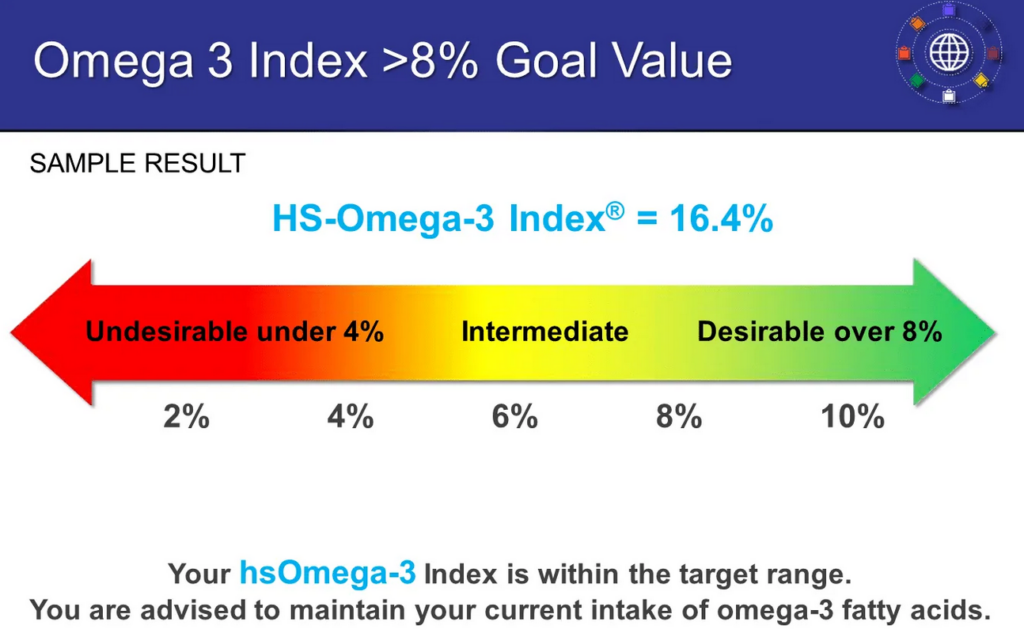
The omega-3 index is measured in % of the total amount of fatty acids in red blood cells:

  • < 4%Deficiency (high risk of cardiovascular diseases).
  • 4-8%Average level (typical for most people).
  • > 8%Optimal level (associated with minimal risk of heart disease).

Ideal target indicator: 8-12% (especially for the prevention of atherosclerosis).


How to increase the Omega-3 index?

  1. Food:
  • Oily fish: salmon, herring, sardines (2-3 servings per week).
  • Seafood: shrimp, oysters.
  • Seaweed (a source of DHA for vegans).
  1. Supplements:
  • Fish oil (contains EPA + DHA).
  • Krill oil (better absorbed).
  • Seaweed oil (suitable for vegetarians).

Dosage to maintain the index > 8%:

  • 500-1000 mg of EPA + DHA per day -for general health.
  • 2000-4000 mg / day – for high triglycerides or inflammation (only under the supervision of a doctor).

Conclusion

The omega-3 index is an important marker that reflects the balance of healthy fatty acids in the body.

  • The norm: 8-12% (red blood cell count).
  • Deficiency (<4%) increases the risk of heart disease, depression, and inflammation.
  • An excess is only possible if you overdose on supplements (risk of bleeding).

To maintain your health, include fatty fish in your diet or take Omega-3 capsules, especially if you are at risk.