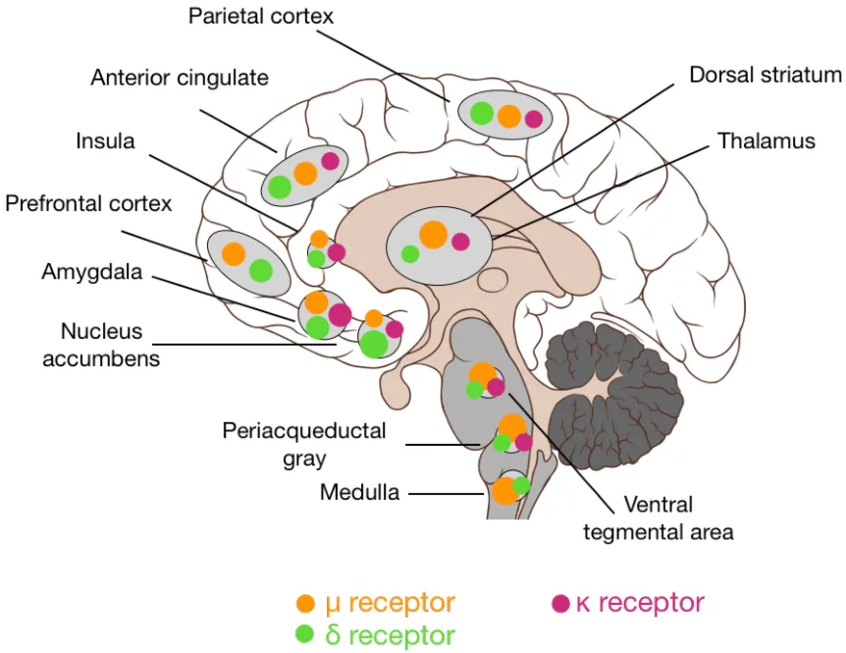
mk- (mu) and δ – (delta) receptors are the two main types of opioid receptors in the human body that are part of the complex endogenous opioid system. This system plays a key role in regulating pain, reward, and many other physiological processes.
Both receptors belong to the class of G-protein coupled receptors (GPCRs), and their activation leads mainly to inhibitory effects in the nervous system.
For clarity, here is a comparative table of their main characteristics:
| Characteristic | μ-receptor (Mu receptor) | δ-receptor (Delta receptor) |
|---|---|---|
| Primary functions | • Analgesia (pain relief) • Euphoria, sense of well-being • Respiratory depression • Constipation • Physical dependence • Sedative effect | • Analgesia (especially in chronic pain) • Mood regulation (antidepressant effect) • Neuroprotection • Modulation of μ-receptor-mediated effects |
| Endogenous ligands (natural body agents) | β-endorphin (high affinityAffinity is the ability of various cells and tissues to capture and bind certain chemical substances that have entered the body or are formed in it.) Enkephalins (moderate affinity) | Enkephalins (high affinity) β-endorphin (moderate affinity) |
| Exogenous agonists (external activators) | Morphine, heroin, fentanyl, methadone, oxycodone | Leu-enkephalin, Met-enkephalin (unstable) SNC80 (experimental compound) |
| Antagonists (blockers) | Naloxone, naltrexone | Naltrindole (experimental) |
| Key effects upon activation | Potent analgesia, euphoria, respiratory depression (main cause of death in overdose), miosis (pupil constriction), reduced gastrointestinal motility. | Analgesia (less potent but with lower risk of respiratory depression), antidepressant effect, modulation of μ-receptor-mediated responses. |
| CNS localization | High density in: • Thalamus (pain relay center) • Periaqueductal gray matter (PAG) • Brainstem (respiratory center) | More restricted distribution: • Olfactory bulbs • Neocortex • Limbic system (emotion-related) |
| Addiction potential | Very high. Primary mediator of the rewarding effects (pleasure/reinforcement) of opioids. | Low. δ-receptor activation alone does not produce significant euphoria or physical dependence. |
This is the most well-known and clinically significant receptor. It is associated with both the powerful therapeutic effects of opioid analgesics and their main dangerous side effects.
The role of δ-receptors is less well understood, but no less important. They often work in tandem with m-receptors.
Opioid receptors rarely work in isolation. Their interaction creates a complex regulatory network. For example, some drugs aim to be bifunctional agonists (for example, activate both m-and d-receptors) or agonist-antagonists (block one type and activate the other) to try to separate desirable effects (pain relief) from undesirable ones (respiratory depression, addiction).