The role of monocytes (MONO) in the body
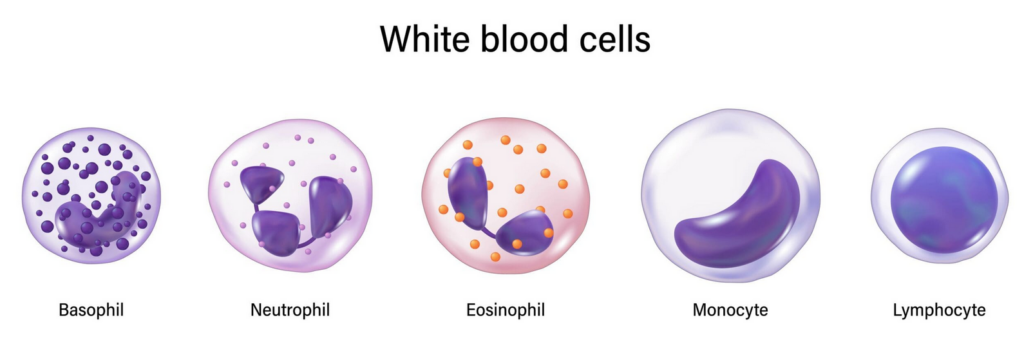
Monocytes are the largest white blood cells (3-10% of the WBC) that act as ‘janitors’ and ‘conductors’ of the immune system. These are the only blood cells that can turn into macrophages – ‘eaters’ of infections.
Main functions:
- Phagocytosis – absorption of bacteria, fungi, dead cells
- Presentation of antigens – training of other immune cells
- Regulation of inflammation – cytokine production
- Control of chronic infections (tuberculosis, syphilis)
- Participation in tissue regeneration
Norm of monocytes in the blood test
| Показатель | Абсолютное значение (×10⁹/л) | Процент от WBC |
|---|---|---|
| Взрослые | 0.1-0.8 | 3-10% |
| Дети | 0.05-1.1 | 2-12% |
| Беременные | до 1.0 | до 12% |
Reduced monocytes (Monopenia)
Critical level: <0.04 ×10⁹/L
Main reasons:
- Aplastic anemia
- Leukemias
- Purulent bacterial infections
- Taking corticosteroids
- Chemotherapy
Symptoms:
- Frequent bacterial infections
- Long-term wound healing
- General weakness
- Increased bleeding
Elevated monocytes (Monocytosis)
Reasons:
- Chronic infections (tuberculosis, brucellosis)
- Autoimmune diseases
- Hematological diseases
- Oncological processes
- Recovery period after infections
Symptoms:
- Long-term subfebrility
- Enlarged lymph nodes
- Night sweats
- Weight Loss
- Joint pain
What should I do if there are deviations?
With monocytosis:
- Exclude tuberculosis (Mantoux test, quantiferon test)
- Check for autoimmune diseases (ANF, CRP)
- Ultrasound of internal organs
- Consultation with a hematologist at a level >1.0 × 10⁹/l
When filling in:
- Bone marrow analysis
- HIV testing
- Evaluation of drug therapy
- Monitoring every 2-4 weeks
Important: Isolated changes in the level of monocytes are rarely of clinical significance – it is important to evaluate them in conjunction with other blood parameters!