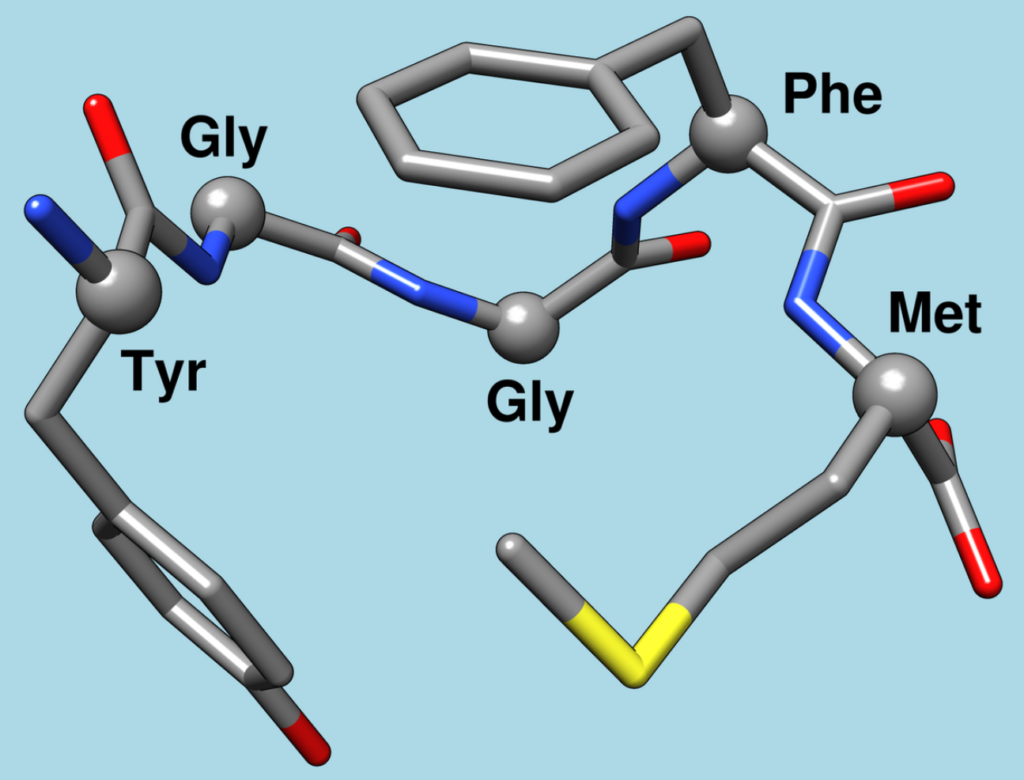
Met-enkephalin (methionine-enkephalin) is one of the two main types of enkephalin, which are short peptides with opioid activity. Enkephalins are part of the body’s endogenous opioid system, which plays a key role in regulating pain, emotions, stress, and other physiological processes.
Structure of met-enkephalin:
Met-enkephalin is a pentapeptide consisting of five amino acidsAmino acids are the fundamental building blocks of proteins and play a key role in biological processes. There are a total of 22 standard amino acids used for protein synthesis in living organisms.. Its sequence: tyrosine-glycine-glycine-phenylalanine-methionine (Tyr-Gly-Gly-Phe-Met). The name ‘met-enkephalin’ comes from the last amino acid in the chain — methionine.
Synthesis and release:
- Enkephalins are synthesized in the body from a larger precursor ,. preproencephalin. This protein is broken down into several active peptides, including met-enkephalin.
- They are produced in the central nervous system (brain and spinal cord), as well as in some peripheral tissues, such as the adrenal glands and gastrointestinal tract.
- Enkephalins are released in response to painful stimuli, stress, or other physiological changes.
Mechanism of action:
Meth-enkephalin acts as a neurotransmitter or neuromodulator, binding to opioid receptors in the brain and other tissues. Main types of opioid receptors:
- mk-receptors (mu-receptors): Binding to these receptors causes analgesia( analgesia), euphoria, and respiratory depression.
- δ-receptors (delta receptors): Involved in emotion regulation and pain modulation.
- k-receptors (kappa receptors): Associated with dysphoria and sedation.
Met-enkephalin has the greatest affinityAffinity is the ability of various cells and tissues to capture and bind certain chemical substances that have entered the body or are formed in it. for δ-receptors, but can also interact with mk-receptors.
Functions of Met-enkephalin:
- Pain regulation: Enkephalins inhibit the transmission of pain signals in the nervous system, reducing the perception of pain.
- Emotional regulation: They affect mood, reducing anxiety and creating feelings of satisfaction.
- Stress response: Enkephalins are involved in the body’s adaptation to stress, reducing the level of cortisol and other stress hormonesHormones are biologically active substances that are produced by specialized cells or glands (such as endocrine glands) and regulate various physiological processes in the body. They act as chemical signals that are transmitted through the bloodstream to organs and tissues to control and coordinate a wide range of functions, including metabolism, growth and development, reproduction, mood, and more. Examples include insulin, testosterone, estrogen, and adrenaline..
- Regulation of the gastrointestinal tract: Enkephalins affect intestinal motility and the secretion of digestive juices.
- Immune modulation: They can affect the activity of immune cells, reducing inflammation.
Metabolism:
Enkephalins are rapidly broken down by enzymesEnzymes are proteins that accelerate chemical reactions in the body. They ensure the occurrence of metabolic processes such as food digestion, energy release, cell formation, and many others. such as enkephalinases, which limits their action over time. This makes them less resistant than synthetic opioids such as morphine.
Clinical significance:
- Research on enkephalins and their analogues is being conducted to develop new painkillers with fewer side effects than traditional opioids.
- Enkephalins are also being studied in the context of treating depression, anxiety disorders, and chronic pain.
Meth-enkephalin, like other endogenous opioids, plays an important role in maintaining the body’s physiological and emotional balance.