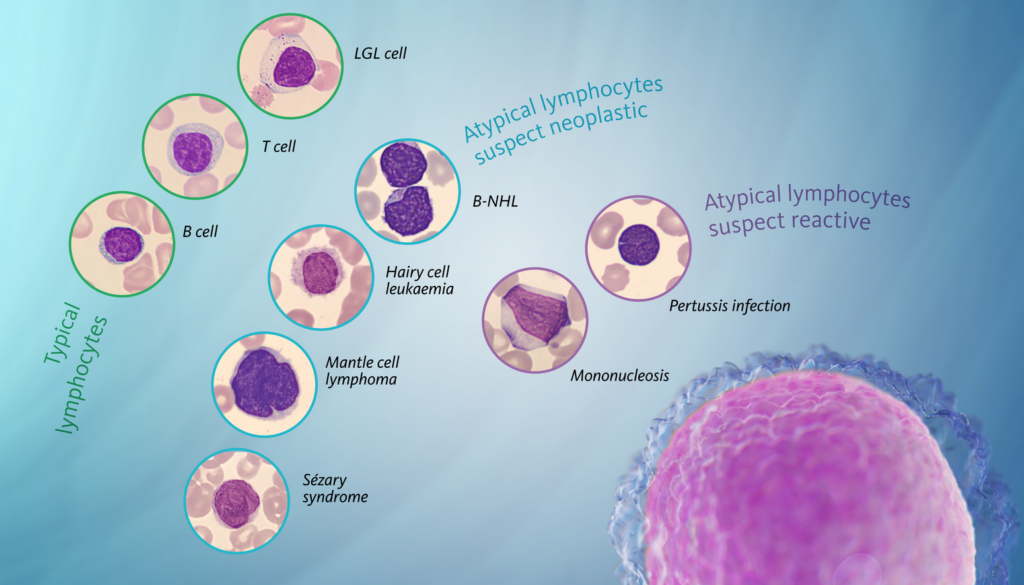
The role of lymphocytes in the body
Lymphocytes are the main ‘intellectuals’ of the immune system (20-40% of the WBC), responsible for the accurate immune response. . These are key cells for fighting viruses, cancer and forming immune memory.
Types and functions:
- B-lymphocytes -produce antibodies (immunoglobulins).
- T-lymphocytes -destroy infected and cancerous cells.
- NK cells -kill tumors and viruses without ‘training’.
Norm of lymphocytes in the blood test
| Parameter | Absolute value (×10⁹/L) | Percentage of WBC |
|---|---|---|
| Adults | 1.0 – 4.8 | 20–40% |
| Children under 6 years | 2.0 – 8.0 | 40–70% |
| Adolescents | 1.2 – 5.2 | 30–50% |
Note: In pregnant women, a reduction of up to 18-20% is acceptable.
Reduced lymphocytes (Lymphopenia)
Critical level: < 0.8 ×10⁹/l (severe immunodeficiency).
Reasons:
- Viruses (COVID-19, HIV, hepatitis).
- Autoimmune diseases (SLE, rheumatoid arthritis).
- Taking immunosuppressants (after transplantation).
- Radiation/chemotherapy.
- Stress, malnutrition.
Symptoms:
- Frequent viral and fungal infections (herpes, thrush).
- Exacerbation of chronic diseases.
- Weight loss + constant weakness.
- Children have developmental delays.
Elevated lymphocytes (Lymphocytosis)
Reasons:
- Viral infections (mononucleosis, measles, chickenpox).
- Tuberculosis, toxoplasmosis.
- Leukemias (CLL, acute lymphoblastic leukemia).
- Autoimmune processes (thyroiditis, Crohn’s disease).
- Smoking, metal poisoning.
Symptoms:
- Enlarged lymph nodes (painless in leukemia).
- Long-term temperature (+37 … 38°C).
- Night sweats, itchy skin.
- Bone pain (with metastases or leukemia).
What should I do if there are deviations?
- For lymphopenia:
- Test for HIV, immunoglobulins.
- Exclude hypovitaminosis (B12, zinc).
- Consultation with an immunologist for LYMPH < 0.5 ×10⁹/l.
- With lymphocytosis:
- Blood smear for atypical cells.
- Ultrasound of the lymph nodes, CT of the chest.
- With LYMPH > 5 × 10⁹/l + spleen enlargement -urgently see a hematologist!
Important: Lymphocytes-markers of latent infections and tumors. Even in the absence of symptoms, significant abnormalities require an in-depth examination!