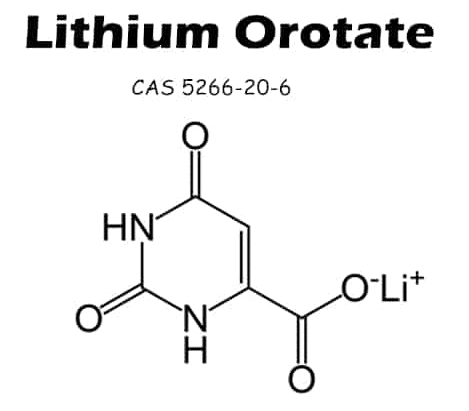
Lithium orotate is a simple chemical salt that consists of lithium and orotic acid. Lithium is used to treat manic states and relieve symptoms of bipolar disorder. And orotic acid increases the bioavailability of lithium itself. Lithium orotate is effective in treating mood swings, attention deficit disorder, depression, and anxiety. It also acts as an antioxidant and protects the brain from free radical damage.
Application: The most common form used in psychiatry for the treatment of bipolar disorder.
Efficiency: High, well studied.
Safety: Requires careful monitoring of lithium levels in the blood, as it has a narrow therapeutic index (the difference between the effective and toxic dose is small).
Side effects: Possible tremors, weight gain, impaired thyroid and kidney function.
Bioavailability: Moderate.
Application: An alternative to lithium carbonate, often used in liquid form.
Efficiency: Comparable to lithium carbonate.
Safety: Also requires monitoring of blood lithium levels.
Side Effects: Similar to lithium carbonate.
Bioavailability: Slightly higher than that of lithium carbonate.
Application: It is used as a dietary supplement to support the nervous system and improve cognitive functions.
Efficacy: Considered less effective for treating psychiatric disorders, but popular in the context of neuroprotection and longevity.
Safety: It is considered safer, as it requires lower doses to achieve the effect.
Side effects: Minimal with the correct dosage.
Bioavailability: High, thanks to orotic acid, which improves the penetration of lithium into cells.
Application: Used in some dietary supplements.
Efficacy: Less studied, but considered effective for supporting the nervous system.
Safety: Considered safe at low doses.
Side effects: Minimal.
Bioavailability: High.
Application: Used in research, less often in clinical practice.
Efficacy: Effective, but less popular due to potential toxicity.
Safety: Requires caution, as it may cause side effects.
Side Effects: Similar to other forms of lithium.
Bioavailability: Moderate.
For most people who consider lithium as a nervous system support or neuroprotection agent, lithium orotate is the most preferred form. It is highly bioavailable, requires lower doses, and has minimal side effects when used correctly.
However, when it comes to treating psychiatric disorders (such as bipolar disorder), lithium carbonate or lithium citrate remains the gold standard, but requires strict medical supervision.
Long-term lithium treatment reduces glutamate-induced toxicity mediated by N-methyl-D-aspartate (NMDA) receptors. This effect was at least partially explained by the ability of lithium to inhibit the influx of calcium, which affects the activity of the NMDA receptor.
Therefore, lithium has the potential to be useful for conditions such as affective disorders, Alzheimer’s disease, diabetes, cancer, and inflammatory and autoimmune diseases.
Lithium increases levels of heat shock proteinsProteins are high-molecular organic substances consisting of alpha-amino acids linked in a chain by a peptide bond. In living organisms, the amino acid composition of proteins is determined by the genetic code. During synthesis, 20 standard amino acids are used in most cases. Many combinations of them determine the great diversity of properties of protein molecules. Proteins play a key role in the immune response and can perform transport, storage, catalytic, structural, and receptor functions. Proteins are an important part of the nutrition of animals and humans. The main sources of proteins are meat, poultry, fish, milk, nuts, legumes, and grains. (HSPs), which promote proper folding of proteins in three-dimensional space, re-folding of damaged proteins, and recycling of atypical proteins.
Among heat shock proteins, HSP70 has a wide range of neuroprotective effects against apoptosis. These effects are caused by inhibition of GSK-3. Lithium is also known to inhibit GSK-3.
Long-term lithium treatment has been shown to induce the production of Bcl-2, a protein in the frontal lobe of the brain that protects cells from apoptosis .
Prolonged exposure of neurons to lithium in culture induces BDNF activity.
BDNF is one of the main neurotrophic agents, essential for cognitive development, synaptic plasticity and survival of neurons, which also has antidepressant and calming effects.
This is probably due to GSK-3 inhibition.
Lithium also increases levels of nerve growth factor (NGF) and glial neurotrophic factor (GDNF) in the hippocampus, frontal cortex, occipital zone, and striatum . NGF and GDNF contribute to increased neuron survival and plasticity (the ability to regenerate and form new connections) among dopaminergic, cholinergic, and serotonergic neurons in the central nervous system.
Lithium increases the production of vascular endothelial growth factor, VEGF, which promotes cell growth and regeneration of blood vessels after a stroke .
By increasing VEGF levels, lithium can promote faster recovery after a stroke or heart attack.
A possible mechanism is lithium inhibition of GSK-3.
Autophagy, or ‘cell self-destruction,’ is when cells break down and recycle cellular components to reuse raw materials. Autophagy is thought to slow aging, prevent cancer, and is important for neuron function and survival.
Lithium can induce autophagy by depletion of inositol stores, regardless of mTOR inhibition (which itself usually induces autophagy).
Since lithium causes autophagy, the drug may be particularly useful for patients with neurodegenerative diseases such as Alzheimer’s disease, Parkinson’s disease, amyotrophic lateral sclerosis and Huntington’s disease, as such disorders are partially characterized by the accumulation of misfolded proteins.
Lithium has been shown to stimulate progenitor cells and stem cells in the culture of hippocampal neurons in the brain (neurons from the memory center). In addition, lithium prevents the loss of proliferationProliferation is the process of cell multiplication, increasing tissue volume. It underlies the growth and differentiation of tissues during individual development, ensures the renewal of cells and intracellular structures. Cell proliferation is a process by which a cell grows and divides to form two daughter cells. caused by glutamate or cortisol (glucocorticoids). Also, long-term lithium treatment promotes the conversion of these progenitor cells into neurons.
In addition, long-term lithium treatment not only improves neurogenesis in the hippocampus (memory center) in healthy mice, but also restores neurogenesis in the brain of an animal model of Down syndrome.
The drug also enhances neurogenesis (the formation of new neurons) in the subventricular zone, the only area other than the hippocampus (memory center) where such an effect was observed, which caused a persistent increase in gray matter volume in patients.
Lithium increases the level of N-acetyl aspartate (NAA), which can be considered as an indicator of creativity and which correlates with IQ values. One of the likely consequences of this may be more effective communication between the two hemispheres of the brain, leading to improved brain activity.
Long-term lithium treatment increases long-term potentiation (LTP) in hippocampal neurons, which gives nerve cells greater performance and thus helps in learning and memory.
In animals, lithium consistently reduces search activity and aggression.
Lithium is also known to have a calming and mood-stabilizing effect in humans, and is also used to treat depression, bipolar disorder, and schizophrenia .
Lithium carbonate is the standard of care for bipolar affective disorder (BAR), reducing the frequency of manic seizures .
Lithium has also been shown to be effective in reducing aggressive behavior in people with attention deficit hyperactivity disorder (ADHD).
Increased levels of natural lithium in drinking water may reduce suicide rates. This may be partly due to the fact that lithium increases serotonin synthesis and release (it also reduces norepinephrine levels).
Lithium increases CCK levels in the brain, and this is part of the mechanism by which lithium prevents mania in bipolar disorder.
Lithium supplementation is one of the most studied approaches for treating depression that is resistant to standard therapy .
Lithium increases postsynaptic sensitivity to serotonin via the 5-HT1A receptor, which partly explains its antidepressant activity.
Lithium also increases BDNF levels, which helps with depression.
Lithium partially attenuates depression in animals by increasing the number of neural stem cells.
Lithium improves insulin-stimulated glucose transport and glycogen synthesis in insulin-resistant muscle in rats. These effects depend on the p38 MAPK.
Lithium reduces the release of insulin.
The use of lithium significantly increased the transport of glucose to muscle cells in response to insulin administration by 2.5 times and also increased the sensitivity to insulin.
Lithium has shown strong effects on activating the immune system.
It was noted that lithium, by inhibiting GSK-3, has a beneficial effect in animal models of autoimmune diseases.
Lithium suppresses the activity of Th1 and interferon-gamma cells (but not Th17 cells).
Lithium has anti-inflammatory effects, reducing the production of IL-1β and TNF-α, and increasing the production of IL-2, TFR, IL-1PA and IL-10 .
However, studies have also shown that under certain experimental conditions, lithium also has pro-inflammatory effects, increasing the production of IL-4, IL-6, and TNF-α.
Lithium increases the levels of IgG and IgM antibodies.
Lithium reduces the production and activity of prostaglandins, thus preventing their negative effect on the immune system.
Lithium reduces the frequency and duration of recurrent infections of labial and genital herpes, and also reduces the frequency of colds .
A comparative study was conducted to assess hip and lumbar spine bone density in 75 volunteers who received lithium and 75 healthy volunteers who did not receive lithium; the groups were normalized by age, gender, and body mass index. The study found lower rates of bone remodeling in lithium-treated volunteers. The average bone mineral density of lithium-treated volunteers was 4.5% higher in the spine, 5.3% higher in the femoral neck, and 7.5% higher in the trochanter of the femur .
Lithium use is associated with a reduced risk of bone fractures and increased osteogenesis
Lithium is known to be the standard of care for patients suffering from bipolar disorder, which is characterized by the presence of episodes of mania and depression.
One of the mechanisms by which lithium can help with bipolar disorder is by lengthening the circadian rhythm. People with bipolar disorder tend to have a shorter circadian rhythm compared to 24 hours.
Lithium promotes faster recovery of our circadian rhythm in response to light and dark
Lithium increased the life span of roundworms (nematodes) and improved overall health indicators, including mitochondrial energy production.
Lithium can improve mitochondrial function by increasing the rate of replacement of non-functioning mitochondria.
Lithium also suppresses mir-34a, which in turn suppresses NAMPT, an enzymeEnzymes are proteins that accelerate chemical reactions in the body. They ensure the occurrence of metabolic processes such as food digestion, energy release, cell formation, and many others. that is involved in NAD+formation. Therefore, lithium probably increases the level of free NAD+.
The researchers found a positive correlation between life expectancy and lithium levels in drinking water. There was a reduction in the risk of death from all diseases in areas of Japan with higher lithium levels.
A similar situation was observed with roundworms (nematodes). Long-term low-dose lithium exposure can slow aging and clearly reduce mortality in evolutionarily distinct species. Improved health was accompanied by improved mitochondrial function.
Obsessive-compulsive disorder (OCD), or obsessive – compulsive disorder, is a mental disorder characterized by obsessive thoughts and behaviors.
Adding lithium to the diet leads to a reduction in OCD symptoms that are resistant to standard therapy.
Compulsive and pathological gamblers also showed a good response to dietary supplementation with lithium, which may regulate dopamineDopamine is a neurotransmitter and hormone that plays a key role in the brain's reward system, motivation, pleasure, learning, and movement regulation.Main functions: Stimulates feelings of pleasure and satisfaction. Involved in motivation and decision-making processes. Regulates motor activity. Affects memory, attention, and mood. imbalance in the brain.
Lithium can reduce the severity of both chronic and episodic cluster headaches.
Lithium carbonate, taken before bed, helped to eliminate ‘hypnotic headache’ (a headache that older people suffer from when they wake up at the same time at night).
Patients suffering from anorexia nervosa for many years have been successfully treated with lithium carbonate.
One patient gained 12 kg and the other 9 kg within 6 weeks, and the weight gain during lithium therapy persisted for a year.
However, further studies of lithium are required to evaluate its applicability for the treatment of anorexia nervosa.
Lithium orotate is used to treat alcoholism.
The drug has proven to be safe, with minimal side effects such as muscle weakness, loss of appetite, or mild apathy.
Lithium carbonate promotes abstinence from alcohol, reduces subjective withdrawal symptoms, and delays the time until the first alcohol consumption.
Patients who received lithium were less likely to be readmitted for alcoholism rehabilitation during 18 months of follow-up.
Additional information
* Lithium reduces inositol levels in the brain.
* Lithium increases vasopressin levels, which stimulates ACTH and cortisol