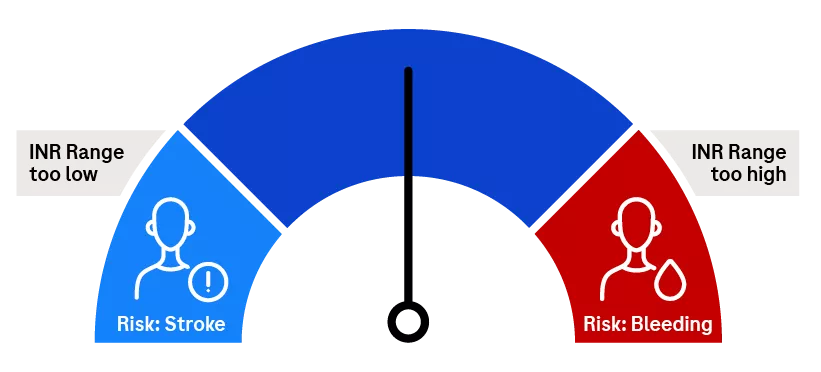
International Normalized Ratio – INR) – role in the body
INR (INR) is a standardized blood clotting index used to monitor anticoagulant therapy (primarily warfarin). Together with PTV (prothrombin time) and PTI (prothrombin index) , it reflects the work of the external blood clotting pathway, which depends on vitamin K.
Physiological role:
- Evaluation of the effectiveness of anticoagulant treatment
- Diagnosis of coagulation factor synthesis disorders (II, VII, IX, X)
- Control of liver function (synthesis of clotting factors)
- Vitamin K deficiency monitoring
Norms of indicators
| Parameter | Normal Range | During Warfarin Therapy |
|---|---|---|
| INR | 0.8–1.2 | 2.0–3.0 (typically) 2.5–3.5 (with mechanical heart valves) |
| PT | 11–16 sec | Increases proportionally to INR |
| PTI | 80–120% | Decreases to 20–40% |
Note: Standards may vary slightly in different laboratories.
Symptoms with increased INR (hypocoagulation)
Reasons:
- Overdose of warfarin
- Severe liver diseases
- Vitamin K deficiency
- DIC-syndrome
- Hemophilia
Clinical manifestations:
- Bleeding problems:
- Nosebleeds
- Gingival bleeding
- Prolonged menstruation
- Hematomas:
- Spontaneous bruising
- Hemarthrosis (hemorrhage in the joints)
- Dangerous states:
- Gastrointestinal bleeding (melena, vomiting of ‘coffee grounds’)
- Hemorrhagic stroke
- Internal organ hemorrhage
Symptoms of low INR (hypercoagulation)
Reasons:
- Insufficient dose of anticoagulants
- Hypervitaminosis K
- Thrombophilia
- Dehydration
Clinical manifestations:
- Thrombosis:
- Pain and swelling in the extremities (DVT)
- Shortness of breath, chest pain (PE)
- Ischemic complications:
- Myocardial infarction
- Ischemic stroke
- With artificial heart valves:
- Prosthetic thrombosis
- Acute heart failure
Diagnostic value
Ratio of indicators:
Tactics for deviations
With increased INR (>4.0):
- Skip taking Warfarin
- Take vitamin K (1-2 mg orally)
- When bleeding – fresh frozen plasma
- Urgent medical consultation
With low INR (<1.5 on therapy):
- Check compliance with the medication regimen
- Eliminate vitamin K intake with food (green vegetables)
- Warfarin dose adjustment
Interesting facts
- The INR was introduced to standardize the performance of PTV between laboratories
- The INR level may fluctuate at:
- Changing your diet
- Taking antibiotics
- Alcohol excesses
- 30% of warfarin-treated patients experience bleeding episodes in the first year of therapy
Conclusions
- INR norm: 0.8-1.2 (without therapy), 2.0–3.5 (on anticoagulants)
- Increased risk of bleeding (adjust the warfarin dose)
- Reduction: risk of thrombosis (increase the anticoagulant dose)
- Most important for patients with:
- Atrial fibrillation
- Mechanical heart valves
- History of thromboembolism
If there are significant deviations in INR, an urgent consultation with a cardiologist or hematologist is required!