
High-density lipoprotein (HDL) cholesterol-role in the body
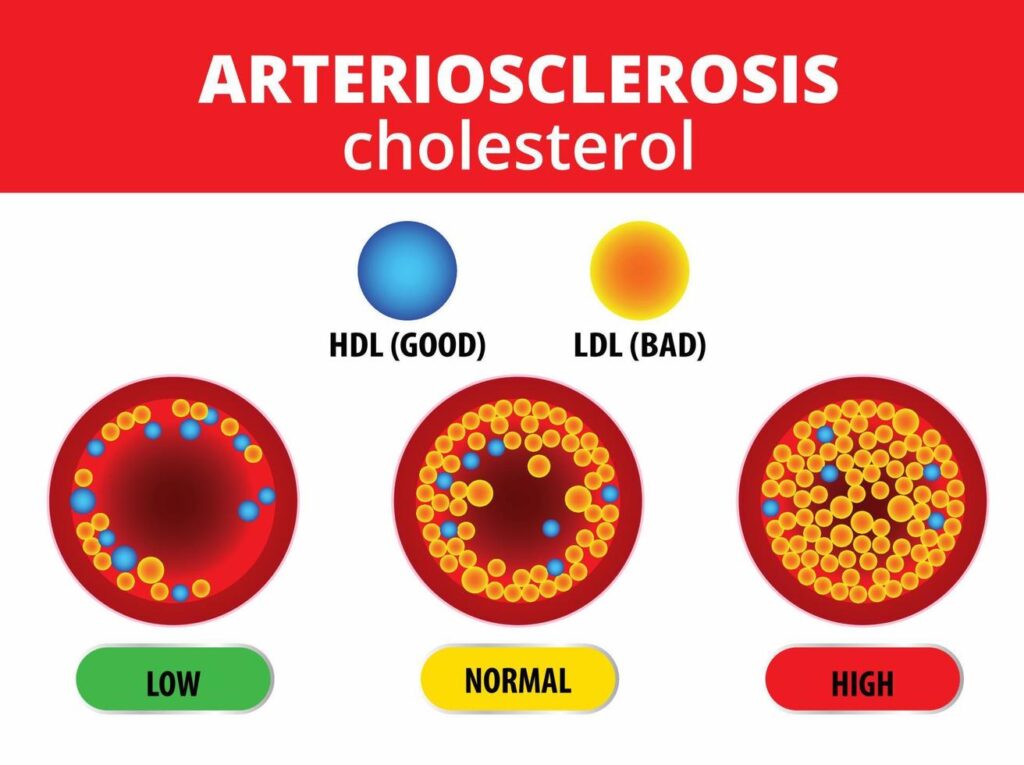
HDL (‘good cholesterol’) – these are lipoproteins that remove excess cholesterol from blood vessels and tissues, transporting it to the liver for processing and elimination.
Main functions of HDL:
- Anti-atherosclerotic effect -cleanses blood vessels from excess cholesterol.
- Anti-inflammatory effect -reduces inflammation in the vascular wall.
- Antioxidant protection -prevents the oxidation of LDL (which accelerates atherosclerosis).
- Immune support -participates in the fight against infections.
HDL norm in the blood test
| Category | Normal HDL (mmol/L) | Normal HDL (mg/dL) |
|---|---|---|
| Men | > 1.0 | > 40 |
| Women | > 1.2 | > 46 |
| Ideal Level (reduces atherosclerosis risk) | > 1.6 (men), > 1.8 (women) | > 60 |
The optimal values depend on gender and the risk of cardiovascular diseases:
Note: The higher the HDL, the better the protection against atherosclerosis.
Symptoms of HDL deficiency (hypoalphalipoproteinemia)
Low HDL levels (<1.0 mmol/L in men, < 1.2 mmol/L in women) increase the risk:
- Atherosclerosis and cardiovascular diseases:
- Coronary heart disease (chest pain during exercise).
- Heart attack, stroke (in combination with high LDL).
- Metabolic disorders:
- Obesity, insulin resistance.
- Type 2 diabetes mellitus.
- For hereditary forms:
- Early heart attacks (up to 50 years).
- Xanthomas (fatty deposits in the skin).
Excess HDL (hyperalphalipoproteinemia)
Very high HDL (> 2.3 mmol / L or > 90 mg / dl) is usually beneficial, but in rare cases may be associated with:
- Genetic mutations (for example, a defect in the CETP protein).
- Chronic inflammatory processes (autoimmune diseases).
- Excessive alcohol consumption (moderately increases HDL, but harms the liver).
The paradox: In some cases , very high HDL (above 3.0 mmol / L) can lose protective properties and even increase the risk of atherosclerosis due to particle dysfunction.
How to increase HDL?
Physical activity -aerobic exercise (running, swimming) increases HDL by 5-10%.
Healthy fats – omega-3 (fish, flaxseed oil), olive oil, avocado.
✅ Quitting smoking increases HDL by 10-15%.
✅ Moderate alcohol consumption (no more than 1 serving per day for women, 2 for men).
Avoid trans fats(fast food, margarine) and excess fast carbs.
Conclusions
- HDL – ‘good cholesterol’, protects blood vessels from atherosclerosis.
- HDL norm:
- Men: &> 1.0 mmol / l (40 mg / dl).
- Women: > 1.2 mmol / l (46 mg / dl).
- Ideal: > 1.6 (men),> 1.8 (women) mmol/L (>60 mg/dl).
- Low HDL – risk of heart attack, stroke.
- Very high HDL (rarely) may lose its protective properties.