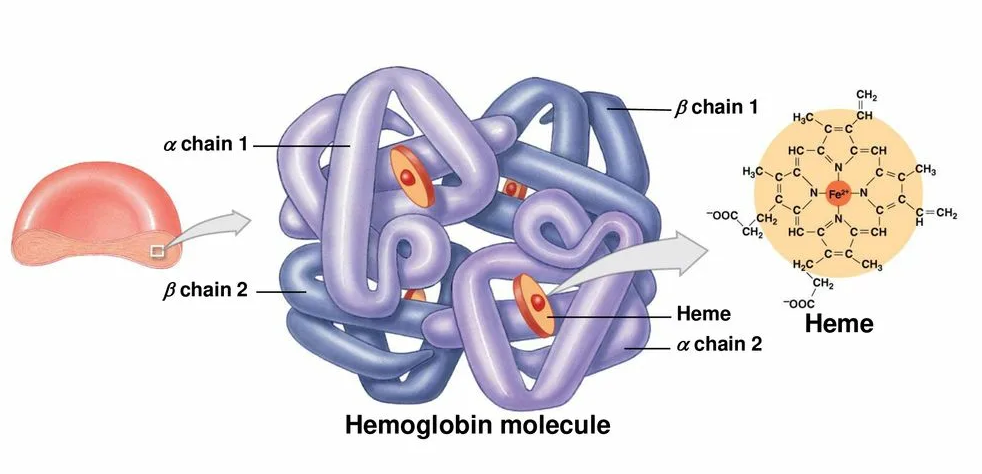
Hemoglobin (Hb) – role in the body
Hemoglobin is an iron-containing protein in red blood cells that is responsible for carrying oxygen from the lungs to the tissues and removing carbon dioxide.
Main functions:
- Oxygen transport -binds O₂ in the lungs and releases it in the tissues.
- Maintaining blood pH -participates in the regulation of acid-base balance.
- Blood color – due to the heme (iron-containing part), the blood has a red color.
Norms of hemoglobin in the blood
| Group | Normal Hb (g/L) | Normal Hb (g/dL) |
|---|---|---|
| Men | 130–160 | 13.0–16.0 |
| Women | 120–150 | 12.0–15.0 |
| Pregnant Women | ≥110 | ≥11.0 |
| Children (1–6 years) | 110–140 | 11.0–14.0 |
| Adolescents (12–18 years) | 120–160 | 12.0–16.0 |
The values depend on age and gender:
Note: Smokers and residents of the highlands may have higher Hb than normal.
Symptoms of hemoglobin deficiency (anemia)
Reasons:
- Lack of iron (IDA), vitamin B12, or folic acid.
- Chronic blood loss (ulcers, menorrhagia).
- Kidney diseases (decreased erythropoietin).
Clinical manifestations:
- Common:
- Weakness, rapid fatigue.
- Pallor of the skin and mucous membranes.
- Dizziness, tinnitus.
- Cardiovascular diseases:
- Shortness of breath during exercise.
- Tachycardia, low blood pressure.
- Specific features:
- Brittle nails and hair (with IDA).
- Burning of the tongue (with B12 deficiency).
Symptoms of excess hemoglobin (erythrocytosis)
Reasons:
- Dehydration (false elevation).
- Chronic hypoxia (COPD, heart defects).
- Vaquez’s disease (true polycythemia).
Clinical manifestations:
- Blood clot:
- Headaches, heaviness in the temples.
- Redness of the skin (especially the face).
- Thrombotic complications:
- Numbness of the limbs.
- Risk of heart attack/stroke.
- Enlargement of the spleen (with polycythemia).
Diagnostics of deviations
What should I do if there are deviations?
With anemia:
- Iron deficiency: Fe + vitamin C supplements.
- B12 deficiency: cyanocobalamin injections.
- Diet: liver, buckwheat, pomegranates.
With erythrocytosis:
- Bloodletting (with polycythemia).
- Hydration (in case of dehydration).
- Treatment of the underlying disease (COPD, heart disease).
Interesting facts
- 1 Hb molecule can carry 4 O₂ molecules.
- The fetus has fetal hemoglobin (HbF), which disappears by the year of life.
- HbA1c (glycated) is used to diagnose diabetes.
Conclusions
- Hb Norm:
- Men: 130-160 g/l.
- Women: 120-150 g/l.
- Decrease – > anemia (weakness, pallor).
- Increased risk of thrombosis (headaches).