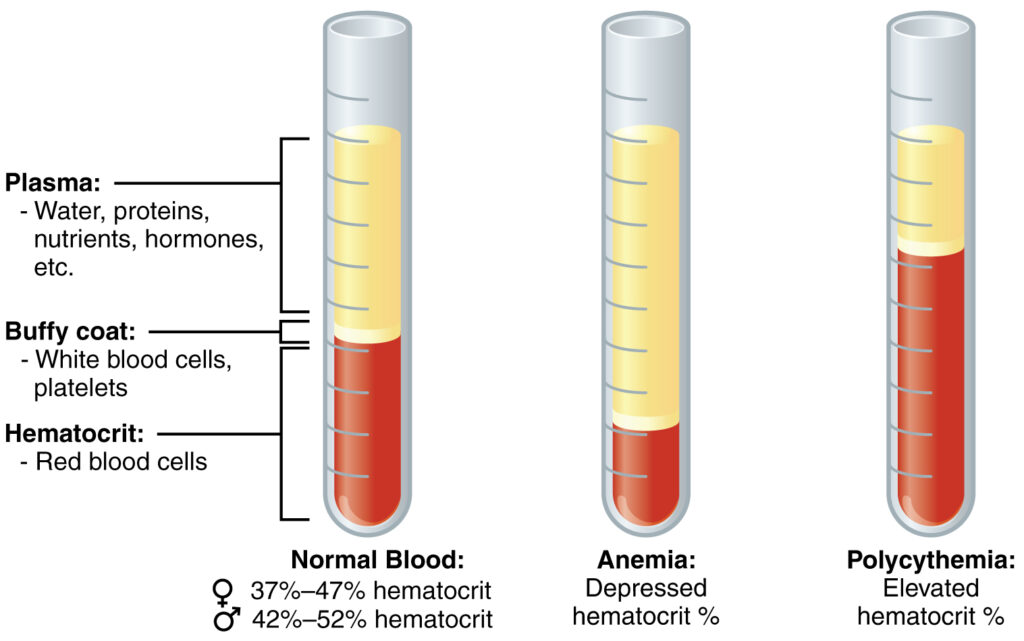
Hematocrit (Hct)

The role of hematocrit (Hct) in the body

Hematocrit (Hct – Hematocrit) is an indicator that reflects the proportion of red blood cells in the total blood volume. .It helps to assess the density of blood and the ability to transport oxygen.

Main functions:

  1. Determination of blood viscosity -affects blood circulation and pressure.
  2. Oxygen capacity assessment – the higher the Hct, the more red blood cells and hemoglobin.
  3. Diagnosis of anemia and polycythemia -helps to identify deviations in the volume of RBC.

Norm of hematocrit in the blood test

GroupNormal (%)
Men40 – 54
Women36 – 48
Children32 – 44
Newborns45 – 65

The values depend on age and gender:

Note: References may vary slightly between laboratories.


Low hematocrit (Hypovolemia, Anemia)

Reasons:

  • Anemia (iron-deficient, B₁₂-deficient, hemolytic).
  • Blood loss (injuries, operations, internal bleeding).
  • Hyperhydration (excess fluid in the body).
  • Pregnancy (physiological dilution of blood).

Symptoms:

  • Pallor, weakness, fatigue
  • Shortness of breath during light exercise
  • Dizziness, fainting spells
  • Rapid heartbeat (tachycardia)
  • Cold hands and feet

Increased hematocrit (Thick blood, Polycythemia)

Reasons:

  • Dehydration (vomiting, diarrhea, lack of water).
  • Chronic hypoxia (smoking, lung diseases, highlands).
  • True polycythemia (bone marrow tumor).
  • Taking anabolics or erythropoietin.

Symptoms:

  • Headaches, tinnitus
  • Redness of the skin (especially the face)
  • Itching after showering (due to histamine release)
  • Increased blood pressure
  • Risk of thrombosis and stroke (due to blood viscosity)

What should I do if there are deviations?

  • At low Hct – look for the cause of anemia (analysis for iron, ferritin, vitamins), increase the consumption of meat, liver, buckwheat.
  • With high Hct – drink more water, avoid smoking, check the kidneys and lungs, in severe cases-bloodletting (as prescribed by a doctor).