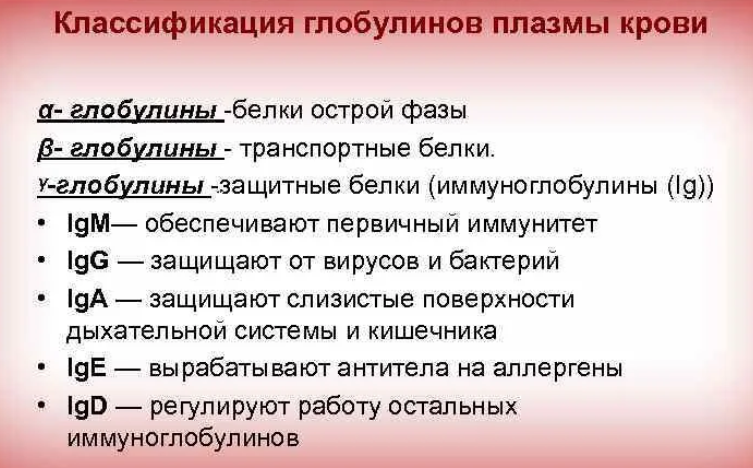
Globulins are a group of plasma proteinsProteins are high-molecular organic substances consisting of alpha-amino acids linked in a chain by a peptide bond. In living organisms, the amino acid composition of proteins is determined by the genetic code. During synthesis, 20 standard amino acids are used in most cases. Many combinations of them determine the great diversity of properties of protein molecules. Proteins play a key role in the immune response and can perform transport, storage, catalytic, structural, and receptor functions. Proteins are an important part of the nutrition of animals and humans. The main sources of proteins are meat, poultry, fish, milk, nuts, legumes, and grains.that perform many functions, including immune defense, substance transport, and blood clotting. They are divided into several fractions determined by serum protein electrophoresis.
| Globulin Fraction | Key representatives | Role in the body |
|---|---|---|
| Alpha-1 globulins | Alpha-1-antitrypsin, alpha-1-acid glycoproteinGlycoprotein is a protein molecule modified by the attachment of one or more oligosaccharide groups to it. | Inhibit proteasesProteases are enzymes that break down proteins., participate in inflammation |
| Alpha-2 globulins | Haptoglobin, ceruloplasmin, alpha-2-macroglobulin | They bind hemoglobin, copper transport, and protease suppression |
| Beta-globulins | Transferrin, hemopexin, complement components (C3, C4) | Iron transport, participation in the immune response |
| Gamma globulins | Immunoglobulins (IgG, IgA, IgM, IgE, IgD) | Antibodies, protection against infections |
Reduced globulin levels may be associated with:
Symptoms:
An increase in the level of globulins is observed when:
Symptoms:
The reference values depend on the method of analysis (electrophoresis or biochemistry).
| Group | Norm (g / l) |
|---|---|
| Adults | 20–35 |
| Children | 18–34 |
| Fraction | Norm (% of total protein) | Norm (g / l) |
|---|---|---|
| Alpha-1 | 2–5% | 0,2–0,4 |
| Alpha-2 | 7–13% | 0,5–1,0 |
| Beta | 8–15% | 0,6–1,2 |
| Gamma | 12–22% | 0,8–1,6 |
Important: Interpretation requires a comprehensive approach, taking into account other indicators (total protein, albuminOne of the main proteins of the human body, responsible for maintaining normal blood composition and transporting various substances throughout the body. It also serves as a reserve source of amino acids. Albumins perform two very important functions: managing the distribution of water within the body, helping the blood transport vitamins, minerals, and medications. They are responsible for water exchange — they help retain it in the vessels and prevent it from excessively moving into the tissues (thus preventing the development of edema). Albumins influence the formation of tissue fluid, urine, and lymph, and also control the process of water absorption from the intestines., creatinine, liver tests).