
Gamma-glutamyltransferase (GGT, Gamma-GT) – role in the body
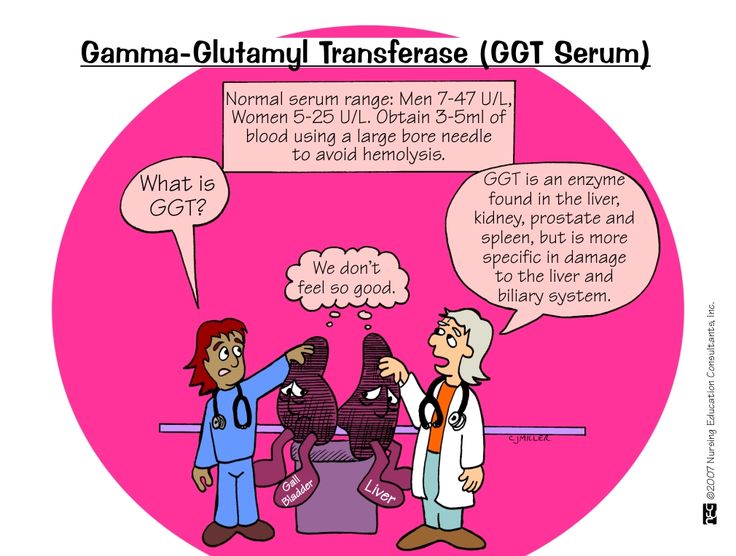
GGT is an enzymeEnzymes are proteins that accelerate chemical reactions in the body. They ensure the occurrence of metabolic processes such as food digestion, energy release, cell formation, and many others. that plays a key role in amino acid metabolism and detoxification of the body. The main locations of its localization:
- Liver (highest concentration)
- Bile ducts
- The pancreas
- Kidneys
- The spleen
Main functions of GGT:
- Participation in the metabolism of glutathione (the most important antioxidant)
- Transfer of amino acidsAmino acids are the fundamental building blocks of proteins and play a key role in biological processes. There are a total of 22 standard amino acids used for protein synthesis in living organisms. across cell membranes
- Participation in detoxification processes
- Marker of the state of the biliary system
GGT norm in the blood test
| Category | Normal GGT (U/L) |
|---|---|
| Adult Men | 10-71 |
| Adult Women | 6-42 |
| Children under 12 | < 30 |
| Adolescents 12-17 years | < 45 (boys), < 33 (girls) |
Reference values vary by gender and age:
Note: Standards may vary slightly in different laboratories.
Symptoms of excess GGT (elevated level)
An increase in GGT usually indicates problems with the liver or biliary tract:
- For liver diseases:
- Nausea, weakness
- Jaundice (yellowing of the skin and sclera)
- Heaviness or pain in the right hypochondrium
- With stagnation of bile:
- Pruritus of the skin
- Lightening of feces
- Darkening of the urine
- In case of alcohol damage:
- Liver enlargement
- Characteristic ‘hepatic’ breath odor
- For other conditions:
- Fatness
- Metabolic syndrome
- Taking hepatotoxic drugs
GGT deficiency (reduced level)
It is extremely rare and has almost no clinical significance. Can be observed:
- For hypothyroidism
- For people taking certain medications (such as clofibrate)
- With excessive intake of vitamin C
Symptoms are absent or non-specific (weakness, fatigue).
Reasons for changing the GGT level
Increase (main reasons):
- Alcoholic liver damage
- Viral hepatitis
- Fatty liver disease
- Cholelithiasis
- Liver tumors
- Pancreatitis
- Taking hepatotoxic drugs
Downgrade (rare cases):
- Hypothyroidism
- Taking certain medications
- Excess vitamin C
What should I do if I have GGT abnormalities?
With increased GGT:
- Exclude alcohol
- Check the liver (ultrasound, hepatitis tests)
- Adjust your diet (diet # 5)
- Check the condition of the gallbladder
- Repeat the analysis in 2-4 weeks
With reduced GGT:
Usually does not require treatment, but it is worth checking the function of the thyroid gland.
Conclusions
- GGT is an important enzyme of the liver and biliary tract
- Norm: men 10-71 U/l, women 6-42 U/l
- An increase indicates problems with the liver/biliary system
- The decrease is not clinically significant
- The most sensitive marker of alcoholic liver damage