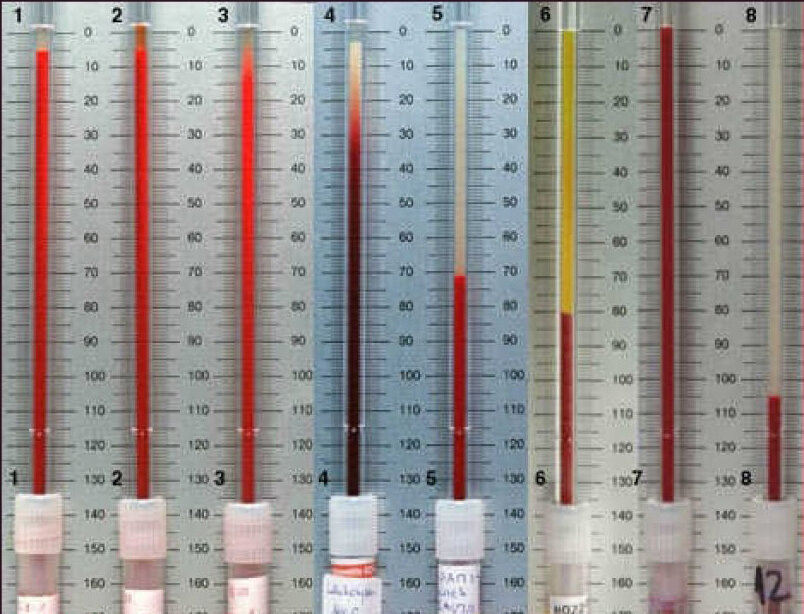
ESR (Erythrocyte Sedimentation Rate) or ESR (Erythrocyte Sedimentation Rate) – a non-specific laboratory indicator that reflects the presence of inflammation, infection, or other pathological processes in the body.
Main functions:
Marker of inflammation -increases in infections, autoimmune diseases, and tumors.
Assessment of the activity of chronic diseases (rheumatoid arthritis, vasculitis).
Monitoring of treatment effectiveness (ESR reduction indicates positive dynamics).
ESR norm in the blood test
Group
Normal (mm/h)
Men
2 – 10
Women
2 – 15
Children
2 – 10
Elderly
Up to 20–30 (age-related increase)
Pregnant Women
Up to 40–50 (physiological increase)
Note: References depend on the measurement method (Westergren, Panchenkov).
Reduced ESR (Rare)
Reasons:
Blood clots (dehydration, erythremia).
Taking medications (NSAIDs, corticosteroids).
Hyperproteinemia (rare genetic diseases).
Symptoms: There are usually no specific symptoms, but there may be: