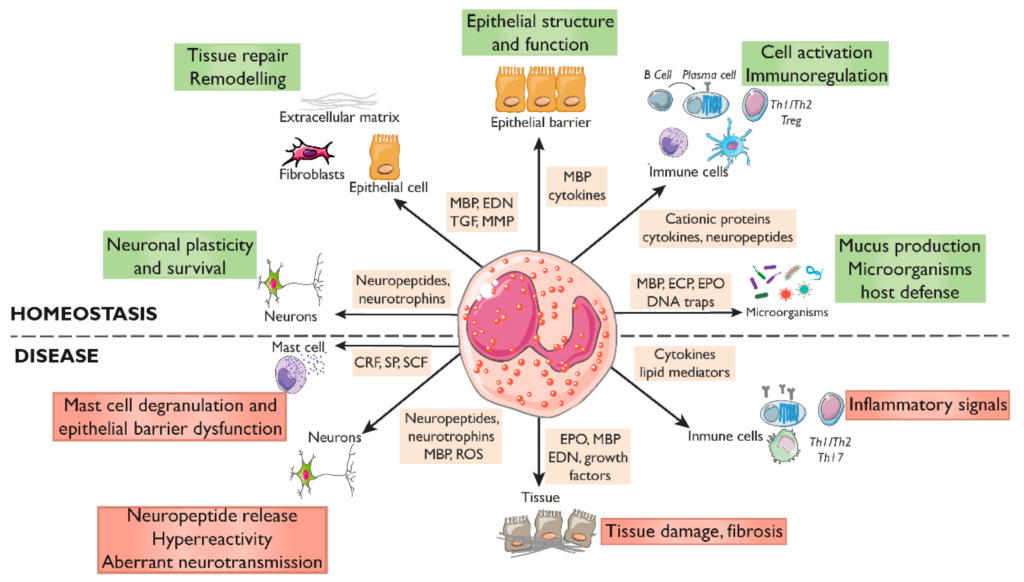
Eosinophils are specialized white blood cells (1-5% of WBC), the main ‘fighters’ against parasites and regulators of allergic reactions. They contain granules with proteinsProteins are high-molecular organic substances consisting of alpha-amino acids linked in a chain by a peptide bond. In living organisms, the amino acid composition of proteins is determined by the genetic code. During synthesis, 20 standard amino acids are used in most cases. Many combinations of them determine the great diversity of properties of protein molecules. Proteins play a key role in the immune response and can perform transport, storage, catalytic, structural, and receptor functions. Proteins are an important part of the nutrition of animals and humans. The main sources of proteins are meat, poultry, fish, milk, nuts, legumes, and grains. that are toxic to parasites.
| Parameter | Absolute value (×10⁹/L) | Percentage of WBC |
|---|---|---|
| Adults | 0.02–0.5 | 0.5–5% |
| Children | 0.05–0.7 | 1–7% |
| Newborns | 0.02–0.85 | 1–8% |
Note: The level may fluctuate during the day (maximum at night).
Critical level: <0.01 ×10⁹/L
Main reasons:
Symptoms:
There are no specific symptoms, but it may occur:
Degrees of severity:
Main reasons:
Typical symptoms:
For eosinophilia:
With eosinopenia:
Important: Eosinophilia >20% requires urgent examination to rule out hypereosinophilic syndrome – a dangerous condition with damage to internal organs!