Dopamine addiction

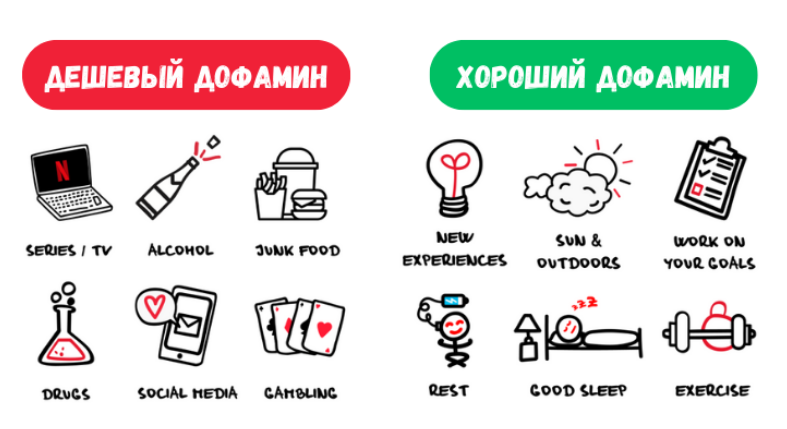
Dopamine addiction is a complex condition that can include cravings for sweets, alcohol, drugs, gambling, social media, and other sources of quick pleasure. Different approaches can be used to combat this addiction, including medication, psychotherapy, and behavioral methods.

1. Drugs that reduce dopamine cravings

Some medications can help reduce excessive dopamine system activity and reduce addiction:

A) To combat food addiction (sweet, overeating)

  • Naltrexone + bupropion (Contrave / Mizar) – reduces food cravings and blocks the pleasure of overeating.
  • Liraglutide (Saxenda, Victosa– is a GLP-1 agonist that reduces appetite and cravings for high-calorie foods.
  • Topiramate– Topamax) – sometimes used off-label to reduce cravings for food and alcohol.

B) For alcohol and drug addiction

  • Naltrexone -blocks opioid receptors, reducing the enjoyment of alcohol and opiates.
  • Acamprosate (Campral) – normalizes the balance of GABA and glutamate, reducing cravings for alcohol.
  • Disulfiram (Antabuse) – causes alcohol poisoning by forming negative reinforcement.
  • Bupropion (Wellbutrin, Zyban) – can reduce cravings for nicotine and overeating.

C) For behavioral addictions (gambling, social networks, shopping)

  • Naltrexone -sometimes used to reduce impulsivity.
  • SSRIs (fluoxetine, sertraline, escitalopram – may reduce compulsive behavior.
  • Atomoxetine (Strattera) – a noradrenaline drug that improves pulse control.

2. Non-medicinal methods

  • Cognitive Behavioral therapy (CBT) – helps you rebuild your thinking and response to triggers.
  • Meditation and mindfulness -reduce impulsivity and increase self-control.
  • Exercise is a natural way to boost dopamine and serotonin without harm.
  • Dopamine detox is a temporary withdrawal from hyperstimulating activities.

3. Natural ways to regulate dopamine

  • L-tyrosine / phenylalanine are dopamine precursors.
  • Magnesium and Omega-3 support the balance of neurotransmitters.
  • Adaptogens (Rhodiola rosea, ginkgo biloba) – help reduce stress and normalize dopamine.

Conclusion

The best approach is a combination of medications (if prescribed by a doctor), therapy, and lifestyle changes. If the addiction is severe (drugs, alcoholism), it is important to consult a narcologist or psychiatrist. For light forms (food, social networks), behavioral methods and working with a psychologist are often enough.