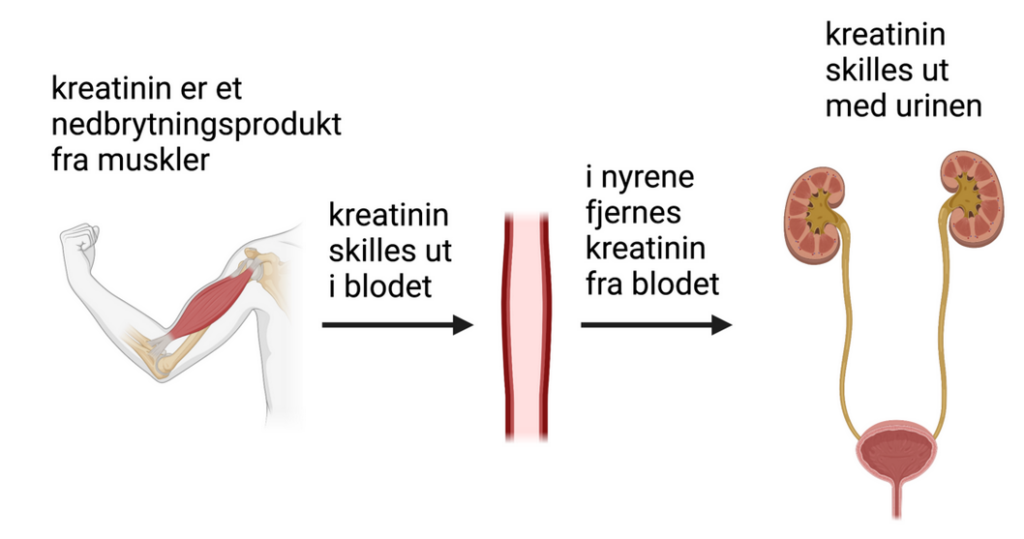
The role of creatinine in the body
Creatinine is the end product of the breakdown of creatinephosphate, which is formed in muscles during energy metabolism. It performs 2 key functions:
- Marker of kidney function-excreted exclusively through the kidneys, so its level reflects the glomerular filtration rate (GFR).
- Muscle Mass Indicator – the more muscle you have, the higher your creatinine.
Norm of creatinine in the blood
| Group | Normal Range (µmol/L) |
|---|---|
| Men | 62–115 |
| Women | 44–97 |
| Children | 27–62 |
| Elderly | 10–15% lower |
The values depend on gender, age, and muscle mass:
Note:
- In athletes, the level can be physiologically increased.
- References depend on the laboratory (some use mg/dl: male – 0.7–1.3, female – 0.6–1.1).
Elevated creatinine (hypercreatininemia)
Reasons:
- Kidney failure (acute or chronic):
- Glomerulonephritis, pyelonephritis.
- Diabetic nephropathy.
- Extrarenal factors:
- Dehydration, shock.
- Massive muscle injuries (rhabdomyolysis).
- Taking nephrotoxic drugs (NSAIDs, antibiotics).
Symptoms:
- Weakness, nausea, swelling.
- Decreased urine volume (oliguria).
- Shortness of breath (with acidosis).
- Pruritus of the skin (with CRF).
Reduced creatinine
Reasons:
- Reduced muscle mass:
- Cachexia (oncology, anorexia).
- Senile sarcopenia.
- Pregnancy (physiological decline).
- Hepatic insufficiency (impaired creatine synthesis).
Symptoms:
- Muscle weakness, rapid fatigue.
- Weight loss (if associated with exhaustion).
How do I normalize the level?
With increased creatinine:
- Treatment of the underlying disease (control of diabetes, hypertension).
- Diet: restriction of protein (0.6–0.8 g / kg), salt, fast food.
- Hydration: 1.5-2 liters of water per day (if there is no swelling).
At a reduced level:
- Increase in protein in the diet (meat, fish, cottage cheese).
- Strength training (for gaining muscle).
When should I take the test?
- With symptoms of renal dysfunction.
- Before prescribing nephrotoxic drugs.
- For chronic diseases –diabetes, hypertension) – 1-2 times a year.
Important: Creatinine does not always reflect the early stages of kidney disease. For an accurate estimate, use:
- GFR (calculated using the CKD-EPI formula).
- Urinalysis for albuminOne of the main proteins of the human body, responsible for maintaining normal blood composition and transporting various substances throughout the body. It also serves as a reserve source of amino acids. Albumins perform two very important functions: managing the distribution of water within the body, helping the blood transport vitamins, minerals, and medications. They are responsible for water exchange — they help retain it in the vessels and prevent it from excessively moving into the tissues (thus preventing the development of edema). Albumins influence the formation of tissue fluid, urine, and lymph, and also control the process of water absorption from the intestines. (microalbuminuria).
Example of interpretation:
- Creatinine 150 mmol / l in a man → stage 2-3 CKD is possible → we check the GFR and ultrasound of the kidneys.