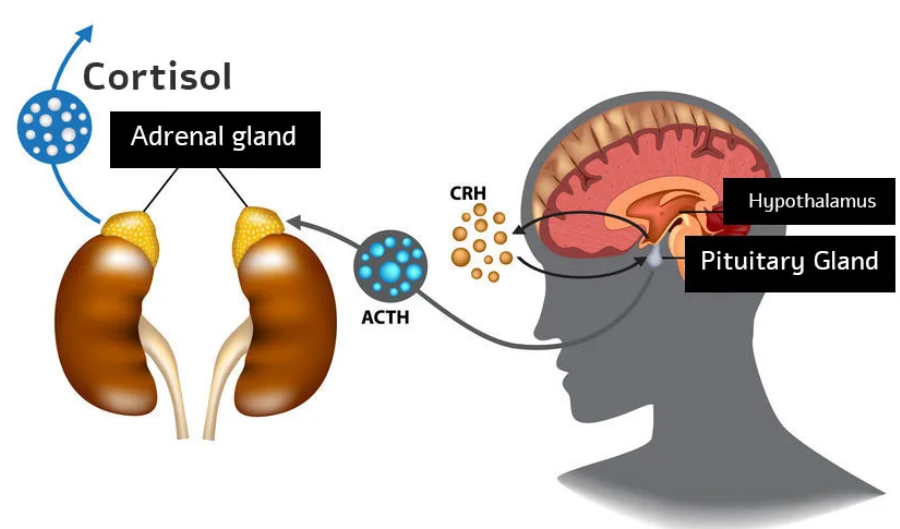
The role of cortisol in the body
Cortisol is a steroid hormone produced by the adrenal glands under the control of the hypothalamic-pituitary system ( HPA axis). It plays a key role in:
- Stress response -helps the body adapt to physical and emotional stress.
- Metabolism -regulates glucose levels, breakdown of proteinsProteins are high-molecular organic substances consisting of alpha-amino acids linked in a chain by a peptide bond. In living organisms, the amino acid composition of proteins is determined by the genetic code. During synthesis, 20 standard amino acids are used in most cases. Many combinations of them determine the great diversity of properties of protein molecules. Proteins play a key role in the immune response and can perform transport, storage, catalytic, structural, and receptor functions. Proteins are an important part of the nutrition of animals and humans. The main sources of proteins are meat, poultry, fish, milk, nuts, legumes, and grains. and fats.
- Immune system – suppresses excessive inflammation (immunosuppressive effect).
- Blood pressure – increases the vasoconstrictor effect of adrenaline.
- Circadian rhythms – its level is maximal in the morning (6: 00-8: 00) and minimal at night (22: 00-2: 00).
Cortisol tests
Cortisol levels can be measured in different biomaterials:
| Test type | When to collect | Reference ranges (lab-dependent) |
|---|---|---|
| Blood (serum) | Morning (8:00–10:00) | 138–635 nmol/L (5–23 µg/dL) |
| Saliva | 4 samples over 24 hours: • Morning (7:00–9:00) • Afternoon (12:00–13:00) • Evening (17:00–18:00) • Night (23:00–24:00) | Morning: 7–28 nmol/L Evening: 2–10 nmol/L |
| 24-hour urine | Collection over 24 hours | 58–403 nmol/24h (21–146 µg/24h) |
| Hair cortisol | Reflects levels over the past 1–3 months | 5–50 pg/mg |
Note:
- Saliva is the best method to assess your circadian rhythm.
- Hair – shows a chronic excess of cortisol (under stress, Cushing’s syndrome).
Symptoms of cortisol deficiency (hypocorticism)
Occurs with adrenal insufficiency (Addison’s disease)or a violation of the pituitary gland.
Signs:
- Chronic fatigue, weakness (especially in the morning).
- Hypoglycemia (dizziness, trembling, sweating).
- Weight loss, lack of appetite.
- Hypotension (low blood pressure, fainting spells).
- Hyperpigmentation of the skin (only in primary insufficiency – Addison’s disease).
Reasons:
- Autoimmune damage to the adrenal glands.
- Long-term use of glucocorticoids with subsequent cancellation.
- Tuberculosis, pituitary tumors.
Symptoms of excess cortisol (hypercorticism)
Occurs with Cushing’s syndrome / disease, chronic stress, or taking synthetic corticosteroids.
Signs:
- Central obesity (belly fat, thin arms/legs).
- Moon-shaped face, ‘buffalo hump’ (deposition of fat on the neck).
- Muscle weakness, especially in the legs.
- High blood pressure, swelling.
- High blood sugar (risk of diabetes).
- Thinning of the skin, stretch marks (striae).
- Depression, insomnia.
Reasons:
- Pituitary gland tumor (Cushing’s disease).
- Adrenal gland tumor.
- Long -term use of prednisone, dexamethasone.
How to normalize your cortisol levels?
If there is a shortage:
- Substitution therapy (hydrocortisone, fludrocortisone).
- Salt diet (for Addison’s disease).
If there is an excess:
- Surgery (removal of a pituitary/adrenal tumor).
- Anti-catabolics (for steroid therapy).
- Reducing stress:
- Meditation, yoga.
- Sufficient sleep (7-9 hours).
- Adaptogens (rhodiola, ashwagandha).
When are tests scheduled?
- Suspected Addison’s disease (weakness, hypoglycemia).
- Signs of Cushing’s syndrome (obesity, hypertension).
- Control of long-term use of corticosteroids.
Conclusion
- Cortisol is a stress hormone that regulates metabolism and immunity.
- Standards:
- Blood (morning): 138-635 nmol/l.
- Saliva (evening): 2-10 nmol/l.
- Urine (day): 58-403 nmol / day.
- Deficiency leads to weakness and hypoglycemia.
- Excess causes obesity, diabetes, and hypertension.