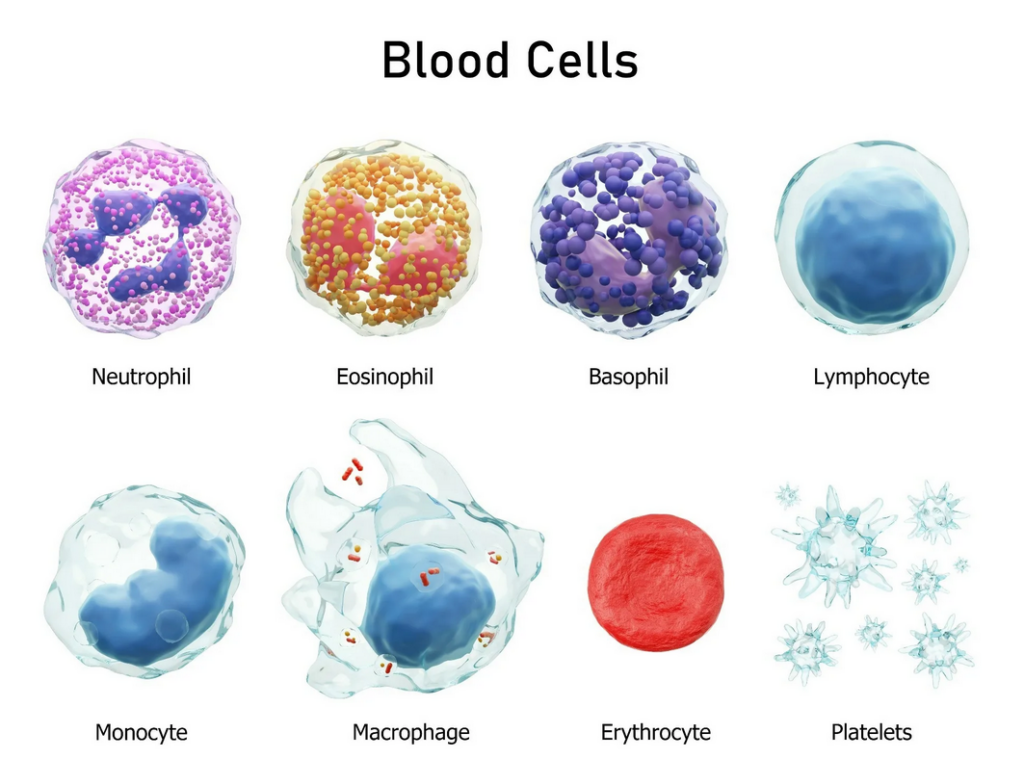
Basophils are the rarest white blood cells (0-1% of WBC), but extremely important ‘signalers’ of the immune system. They contain granules with histamine and heparin.
Key features:
Triggering allergic reactions (histamine release)
Anticoagulant action (heparin)
Control of parasites
Involvement in inflammatory processes
Regulation of the immune response
Norm of basophils in the blood test
Parameter
Absolute value (×10⁹/L)
Percentage of WBC
Adults
0.01–0.065
0–1%
Children
0–0.1
0–1.5%
Note: A physiological increase is possible during ovulation in women.
Reduced basophils (Basopenia)
Critical level: 0 × 10⁹/L (often not clinically relevant)
Main reasons:
Acute stress
Hyperthyroidism
Acute infections
Taking corticosteroids
Pregnancy
Symptoms: Usually absent, they can disguise themselves as the underlying disease
Elevated basophils (Basophilia)
Significant increase: >0.1 ×10⁹/l
Main reasons:
Allergic reactions
Chronic inflammation
Hematological diseases
Endocrine disorders
Autoimmune processes
Typical symptoms:
Skin pruritus, urticaria
Redness of the skin
Suffocation attacks (with allergies)
Joint pain (due to autoimmune processes)
Enlargement of the spleen (in hematological diseases)
What should I do if there are deviations?
With basophilia:
Allergological examination
IgE Analysis
Elimination of chronic inflammation (CRP)
Consultation of a hematologist with a persistent increase in blood pressure
Bone marrow examination for suspected leukemia
For basopenia:
Usually does not require treatment
Monitoring when taking hormonal medications
Thyroid function study
Important: Basophilia >2% requires special attention – it can be an early sign of myeloproliferative diseases!