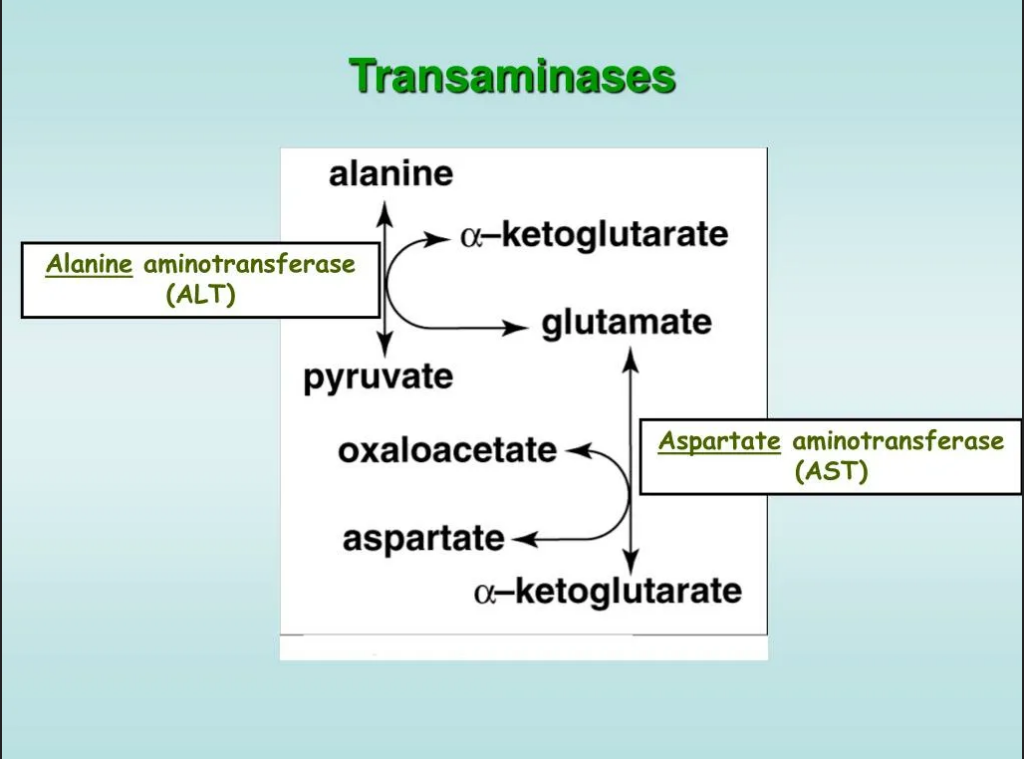
Alanine aminotransferase (ALT) in a blood chemistry test
ALT is an enzymeEnzymes are proteins that accelerate chemical reactions in the body. They ensure the occurrence of metabolic processes such as food digestion, energy release, cell formation, and many others. found primarily in liver cells, but also in smaller amounts in the kidneys, heart, and muscles. When these organs are damaged, ALT is released into the bloodstream, making it an important marker of liver disease.
Basic ALT functions:
- Participates in the exchange of amino acids (reamination).
- Helps convert alanine to pyruvate (a key metabolite of energy metabolism).
- The main indicator of the integrity of liver cells (hepatocytesHepatocytes are the main cells of the liver. They account for 60 to 80% of the mass of the entire organ. These are the main functional units of the liver, involved in a wide range of physiological processes such as nutrient metabolism, protein synthesis, detoxification, and bile secretion.).
Norm of ALT in the blood
| Category | Reference Values (U/L) |
|---|---|
| Men | 10–40 (up to 50 in some laboratories) |
| Women | 7–35 |
| Children | Up to 30–45 (age-dependent) |
Note:
- In newborns, the level may be 2-3 times higher than normal (physiologically).
- During pregnancy, ALT should not increase significantly.
Deviations from the norm
1. Elevated ALT (hyperalanintransferasemia)
Reasons:
- Liver diseases:
- Hepatitis (viral, alcoholic, toxic).
- Fatty liver disease (steatosis, steatohepatitis).
- Cirrhosis, tumors, and metastases.
- Damage to other organs:
- Myocardial infarction (moderate elevation).
- Muscle injuries (rhabdomyolysis).
- Pancreatitis.
- Medications: paracetamol, statins, antibiotics.
Symptoms of excess (in liver diseases):
- Jaundice (yellowing of the skin and eyes).
- Heaviness/pain in the right hypochondrium.
- Nausea, vomiting, loss of appetite.
- Light stools, dark urine.
- Itchingof the skin.
How dangerous is it?
- High ALT (>100-200 U / L) indicates acute hepatitis or liver necrosis.
- Without treatment, it leads to liver failure.
2. Low ALT
ALT deficiency is an extremely rare condition, as the enzyme is normally present in the blood in small amounts.
Possible reasons:
- Deficiency of vitamin B6 (pyridoxine), a cofactor of ALT.
- Severe chronic liver diseases (with cirrhosis-the cells are already destroyed, and ALT is not released).
Symptoms of deficiency:
- Non-specific: weakness, fatigue (due to hypovitaminosis B6).
- With cirrhosis-signs of liver failure: ascites, bleeding.
How dangerous is it?
- Low ALT is not a diagnosis, but it can mask severe pathologies.
Additional tests
To clarify the diagnosis, prescribe:
- AST– aspartate aminotransferase) – AST/ALT ratio >1 is characteristic of alcoholic liver damage.
- Alkaline phosphatase (ALP), GGT – markers of cholestasis.
- Bilirubin (total, direct) – assessment of liver function.
- Ultrasound of the liver, elastography.
What should I do if there are deviations?
If ALT is raised:
- Exclude hepatitis: antibody tests (HCV, HBsAg), PCR.
- Discontinue hepatotoxic medications (in consultation with your doctor).
- Diet: abstain from alcohol, fatty foods, fried foods.
- Hepatoprotectors (ursodeoxycholic acid, essential phospholipids).
If ALT is lowered:
- Vitamin B6 intake (if confirmed deficiency).
- Liver examination (if cirrhosis is suspected).
Important!
- ALT is a more specific liver markerthan AST.
- A moderate increase (50-100 U / l) may occur with fatty hepatosis.
- Consultation with a hepatologist or gastroenterologist is mandatory if there is a persistent increase in ALT!
For prevention purposes:
- Control your weight (obesity → steatosis).
- Limit alcohol consumption.
- Check your liver samples once a year if there are any risks.