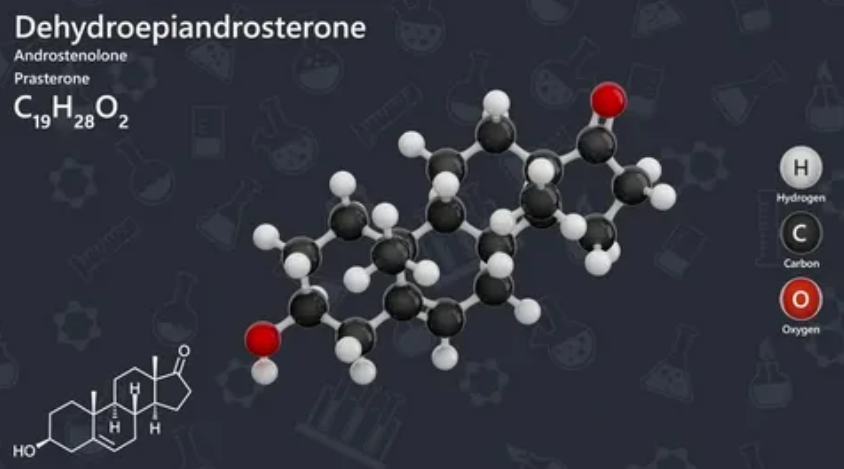
Role of DHEA-S (Dehydroepiandrosterone Sulfate) in the Body
DHEA-S is a steroid hormone produced primarily by the adrenal cortex (95%) and, in small amounts, by the ovaries/testes. It is a prohormone, a precursor to testosterone and estrogens.
Main Functions:
- Source of sex hormonesHormones are biologically active substances that are produced by specialized cells or glands (such as endocrine glands) and regulate various physiological processes in the body. They act as chemical signals that are transmitted through the bloodstream to organs and tissues to control and coordinate a wide range of functions, including metabolism, growth and development, reproduction, mood, and more. Examples include insulin, testosterone, estrogen, and adrenaline. (especially important for women after menopause and for men with age-related decline).
- Anabolic effects (moderate influence on muscle mass and strength).
- Neuroprotective and anti-stress effects (reduces anxiety, improves cognitive function).
- Maintenance of libido (especially in women).
- Affects immunity (can modulate inflammation).
- Linked to longevity (its levels decline with age, correlating with the aging process).
Symptoms of DHEA-S Deficiency
Causes:
- Adrenal insufficiency (Addison’s disease).
- Hypopituitarism (low ACTH).
- Age-related decline (levels drop by 2–3% per year after age 30).
Symptoms:
- Chronic fatigue, low energy.
- Decreased libido (especially in women).
- Depression, anxiety.
- Loss of muscle mass and strength.
- Impaired memory and concentration.
- Dry skin, brittle hair.
- Weakened immunity (frequent infections).
Symptoms of Excess DHEA-S
Causes:
- Adrenal tumor (androgen-producing adenoma/carcinoma).
- Congenital adrenal hyperplasia (CAH) – 21-hydroxylase deficiency.
- Polycystic ovary syndrome (PCOS) (in women).
Symptoms in Women:
- Hirsutism (excessive hair growth on the face and body).
- Acne, oily skin.
- Male-pattern baldness (androgenic alopecia).
- Menstrual irregularities (oligomenorrhea, amenorrhea).
- Deepening of the voice.
- Clitoral enlargement.
Symptoms in Men:
- Usually less pronounced (since DHEA-S is weaker than testosterone).
- Possible aggressiveness, acne, early baldness.
In Children:
- Precocious puberty (early hair growth, genital enlargement).
Normal DHEA-S Levels in Blood Tests
Levels depend on sex, age, and the laboratory.
Reference Values (µg/dL):
| Group | DHEA-S (µg/dL) | DHEA-S (µmol/L)* |
|---|---|---|
| Women (20–30 years) | 65–380 | 1.8–10.3 |
| Women (postmenopausal) | 10–200 | 0.3–5.4 |
| Men (20–30 years) | 140–530 | 3.8–14.3 |
| Men (after 50 years) | 30–260 | 0.8–7.0 |
| Children (prepubertal) | <100 | <2.7 |
*Conversion: 1 µg/dL ≈ 0.027 µmol/L
What to Do if Levels Are Abnormal
If DHEA-S is Elevated:
- Rule out adrenal tumor (CT/MRI scan).
- Test for CAH (17-OH-progesterone test).
- In women – rule out PCOS (ovarian ultrasound, testosterone, LH/FSH).
If DHEA-S is Low:
- Check adrenal function (cortisol, ACTH, aldosterone).
- DHEA replacement therapy may be considered (only under medical supervision!).
Conclusion
- DHEA-S is an important hormone affecting energy, libido, immunity, and aging.
- Excess leads to androgenic effects (especially in women).
- Deficiency causes fatigue, depression, and decreased libido.
- Normal ranges depend on age and sex; abnormalities require diagnostic investigation.
Important: Do not take DHEA supplements without a doctor’s prescription – they can disrupt your hormonal balance!