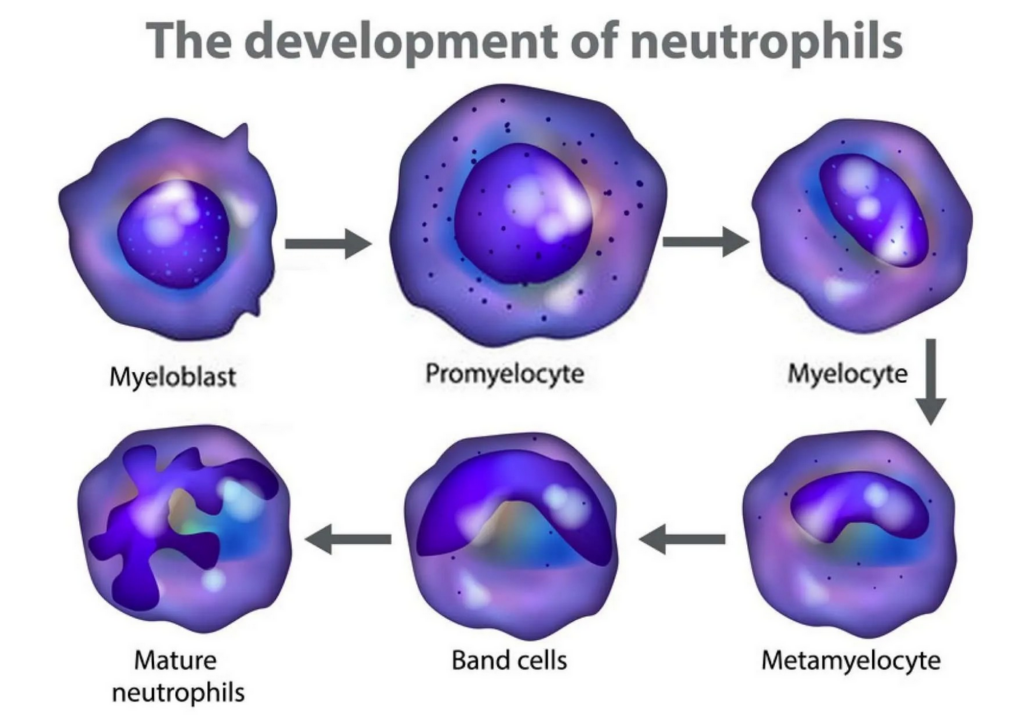
The role of neutrophils (NEUT) in the body
Neutrophils are the most numerous white blood cells (50-75% of all WBC), the main ‘rapid response’ against bacteria and fungi. They are called the ‘first line of defense’.
Key features:
- Phagocytosis is the absorption and digestion of bacteria.
- Release of antimicrobial substances (defensins, lysozyme).
- Formation of pus (dead neutrophils + microbes).
- Trigger inflammation (signal infection).
The norm of neutrophils in the blood test
| Parameter | Absolute value (×10⁹/L) | Percentage of WBC |
|---|---|---|
| Adults | 1.8 – 7.5 | 48–75% |
| Children | 1.5 – 8.5 | 30–60% |
| Newborns | 6.0 – 26.0 | 50–70% |
Note: In pregnant women, an increase of up to 12-14 ×10⁹/l is acceptable.
Reduced neutrophils (Neutropenia)
Critical levels:
- Easy: 1.0-1.5 ×10⁹/l
- Average: 0.5-1.0 ×10⁹/l
- Heavy: <0.5 ×10⁹/l (risk of fatal infections!)
Reasons:
- Viruses (influenza, measles, HIV).
- Chemotherapy/radiation.
- Autoimmune diseases (SLE, rheumatoid arthritis).
- Vitamin B3/folate deficiency.
- Congenital pathologies (Kostmann’s syndrome).
Symptoms:
- Frequent purulent infections (sore throats, pneumonia).
- Ulcers in the mouth, bleeding gums.
- Temperature + weakness for no obvious reason.
- Children have developmental delays.
Elevated neutrophils (Neutrophilosis)
Reasons:
- Bacterial infections (sepsis, tuberculosis).
- Injuries/burns/heart attacks (tissue necrosis).
- Stress/physical activity.
- Oncology (leukemias, stomach cancer).
- Smoking, pregnancy.
Symptoms:
Depend on the underlying disease:
- Purulent discharge (from wounds, sputum).
- Fever + sweating.
- Pain in the affected organ (for example, with appendicitis).
What should I do if there are deviations?
- With neutropenia:
- Avoid contact with patients.
- Urgent visit to a hematologist for NEUT < 0.5 ×10⁹/l (risk of sepsis!).
- Analysis for antineutrophil antibodies (ANA).
- With neutrophilosis:
- Search for the source of infection (CRP, procalcitonin, crops).
- With NEUT > 20 ×10⁹/L , exclude leukemia (bone marrow biopsy).
Important: Neutrophils are the first to react to danger – their fluctuations require a quick diagnosis!