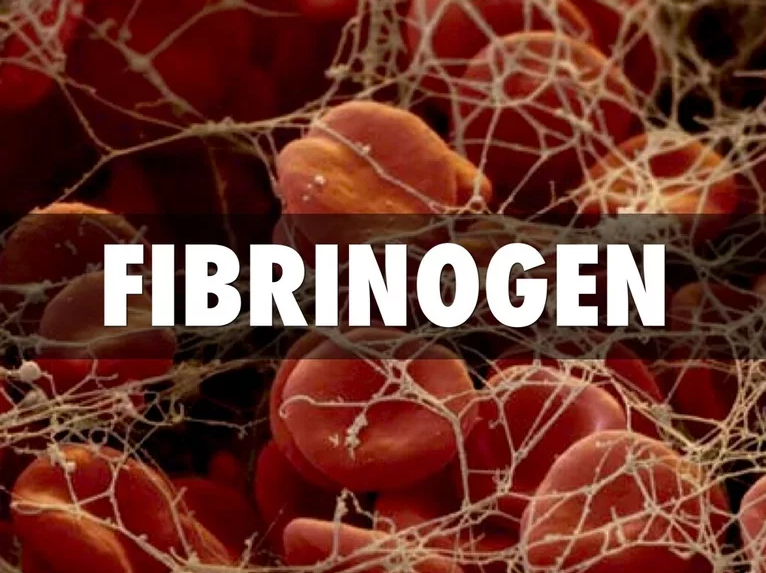
Fibrinogen

The role of fibrinogen in the body

Fibrinogen (clotting factor I) is a plasma proteinsynthesized in the liver. Its main functions are:

  1. Blood clotting:
  • It is converted to fibrin by the action of thrombin, forming the basis of a blood clot.
  1. Inflammatory response:
  • It is involved in reactions of the acute phase of inflammation (increases with infections, injuries).
  1. Tissue regeneration:
  • Stimulates wound healing.

The norm of fibrinogen in the blood

GroupNormal Range (µmol/L)
Adults5–15
Pregnant Women< 10
Children< 5

Critical values:

  • < 0.5 g / l – high risk of bleeding.
  • > 7 g / l – risk of thrombosis.

Increased fibrinogen (hyperfibrinogenemia)

Reasons:

  1. Inflammation/infections:
  • COVID-19, pneumonia, and rheumatoid arthritis.
  1. Injuries/burns/surgeries.
  2. Cardiovascular diseases:
  • Atherosclerosis, heart attack, stroke.
  1. Other states:
  • Smoking, obesity, and diabetes.

Symptoms and consequences:

  • Thrombosis (PE, stroke, heart attack).
  • Accelerated progression of atherosclerosis.

Reduced fibrinogen (hypofibrinogenemia)

Reasons:

  1. Genetic disorders:
  • Afibrinogenemia, Willebrand’s disease.
  1. Liver failure (impaired synthesis).
  2. DIC-syndrome (massive consumption of fibrinogen).
  3. Medicines:
  • Thrombolytics (streptokinase), valproic acid.

Symptoms:

  • Bleeding (nasal, gingival, menorrhagia).
  • Hematomas with minimal injuries.
  • Long-term wound healing.

How do I normalize the level?

With increased fibrinogen:

  1. Treatment of the underlying disease (antibiotics for infections, statins for atherosclerosis).
  2. Anticoagulants (aspirin, warfarin-as prescribed by a doctor).
  3. Diet:
  • Omega-3 fatty acids (fish, flaxseed oil).
  • Garlic, turmeric (natural anticoagulants).

At a reduced level:

  1. Substitution therapy:
  • Cryoprecipitate, fresh frozen plasma.
  1. Vitamin K (if deficient).
  2. Withdrawal of provoking drugs.

When should I take the test?

  • Before surgery (assessment of the risk of bleeding).
  • For thrombosis/bleeding of unknown cause.
  • Monitoring during pregnancy and DIC.

Important: The results should be interpreted in combination with the D-dimer, INR, and APTT.

Example:
Fibrinogen 5.8 g / l + elevated D-dimer → suspected thrombosis → Venous ultrasound.