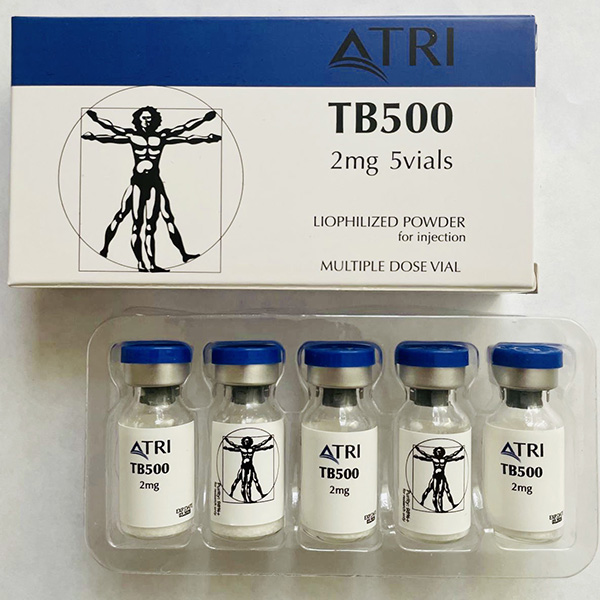
The question of the effect of TB-500 (a synthetic analogue of Thymosin Beta-4) on cancer processes is complex and not fully understood. Thymosin Beta-4 and its analogues, such as TB-500, have many biological functions, including stimulating tissue regeneration, angiogenesis (the formation of new blood vessels), and anti-inflammatory effects. However, these same properties can potentially affect cancer processes, both positively and negatively.
Possible mechanisms of TB-500 impact on cancer:
- Stimulation of angiogenesis:
- TB-500 promotes the formation of new blood vessels, which can be useful for repairing damaged tissues. However, in the context of cancer, angiogenesis can promote tumor growth, since cancer cells need a blood supply for their development.
- Tissue regeneration and cell proliferationProliferation is the process of cell multiplication, increasing tissue volume. It underlies the growth and differentiation of tissues during individual development, ensures the renewal of cells and intracellular structures. Cell proliferation is a process by which a cell grows and divides to form two daughter cells.:
- Anti-inflammatory effect:
- Chronic inflammation is one of the factors that contribute to the development of cancer. TB-500, by reducing inflammation, could theoretically reduce the risk of certain cancers. However, suppressing inflammation can also weaken the immune response against tumor cells.
- Effects on apoptosis (programmed cell death):
- TB-500 increases cell survival by preventing apoptosis. In the context of cancer, this can be dangerous, as cancer cells can use this mechanism for their survival.
Research and data:
- Preclinical studies:
- Some studies in animals and in vitroIn vitro can be defined as in a test tube, outside a living organism. This term is used in scientific research when experiments are conducted in an artificially created environment that mimics the conditions of a living organism. (in the laboratory) show that Thymosin Beta-4 can promote tumor growth by stimulating angiogenesis and cell proliferation.
- At the same time, there is evidence that Thymosin Beta-4 may have a protective effect in certain types of cancer, for example, by reducing inflammation.
- Clinical data:
- Currently, there is not enough clinical data to draw unambiguous conclusions about the impact of TB-500 on cancer in humans. Most studies are in the early stages.
Risks of using TB-500 in cancer:
- Stimulating tumor growth:
- Because of TB-500’s ability to stimulate angiogenesis and cell proliferation, there is a theoretical risk that it may promote the growth of pre-existing tumors.
- Lack of data:
- The lack of large clinical trials makes the use of TB-500 in cancer unsafe, especially without medical supervision.
Conclusion:
TB-500 (Thymosin Beta-4) can potentially affect cancer processes, but this effect is ambiguous. On the one hand, its anti-inflammatory properties can be useful, on the other — stimulation of angiogenesis and cell proliferation can promote the growth of tumors. Currently, there is insufficient evidence to recommend TB-500 for the treatment or prevention of cancer.
If you have cancer or are at risk, it is strongly recommended not to use TB-500 without consulting an oncologist. Self-medication can be dangerous and lead to undesirable consequences.