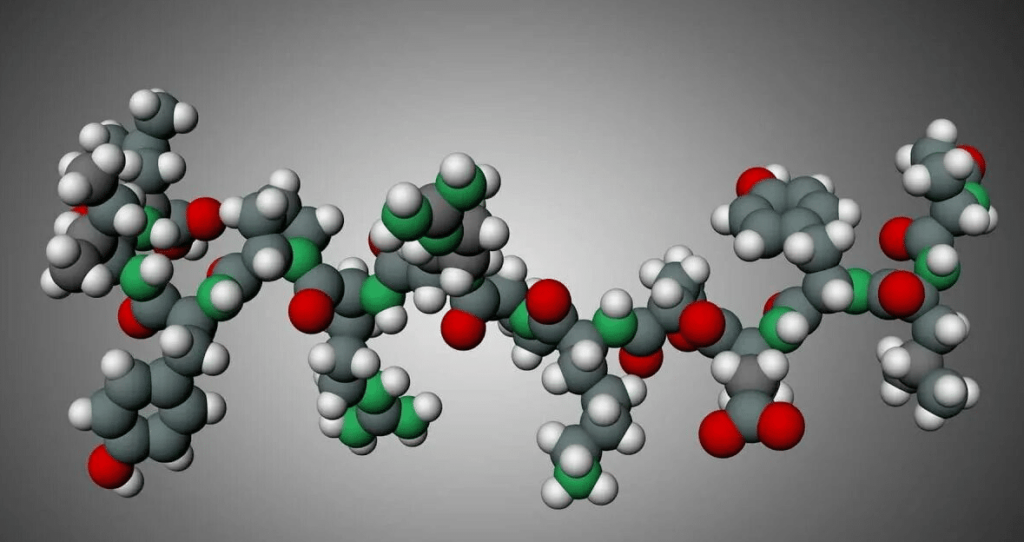
The average molecular weight (based on the weight of a hydrogen atom being 1) of each amino acid is approximately between 100 and 125 Daltons.
The size of a peptideA peptide is a molecule consisting of a chain of amino acids linked together by peptide bonds. Peptides are shorter chains than proteins and usually contain from 2 to 50 amino acids. When the number of amino acids in a chain exceeds 50, such molecules are called proteins. Peptides can perform various functions in the body, including: Hormones, Neuropeptides, Antibiotics, Antioxidants plays an important role in its ability to penetrate the skin. In general, peptides with a size of up to 500 Daltons (Da) can penetrate the upper layers of the skin, such as the epidermis.
However, for a peptide to penetrate into the deeper layers of the dermis or into the bloodstream, it must be sufficiently small and sufficiently lipophilic (i.e., soluble in fats).
Thus, peptides with a size of up to 500 Da can penetrate the skin and exert effects, such as moisturizing, stimulating collagenCollagen is a fibrillar protein, one of the main building elements of the body. It constitutes a significant part of connective tissues such as skin, tendons, joints, bones, and cartilage. Collagen provides strength, elasticity, and structural integrity to these tissues, giving them the ability to resist stretching. synthesis, and other cosmetic or therapeutic actions. Peptides with a higher mass are more likely to remain on the surface or in the upper layers of the epidermis.
Proteins are polymeric molecules where amino acids serve as the monomers. Only 20 alpha-amino acids are found in the proteins of the human body. The same amino acids are present in proteins with different structures and functions. The individuality of protein molecules is determined by the sequence of amino acids in the protein.
Amino acids are organic acids containing one or more amino groups.
All α-amino acids, except aminoacetic acid (glycineGlycine is an amino acid that regulates metabolic processes in the central nervous system. It belongs to neurotransmitters (participates in the transmission of nerve impulses). Glycine is a key component of collagen, which gives structure to bones, muscles, connective tissues, and skin. It also participates in the transmission of nerve impulses, increasing the efficiency of information transfer between neurons.), have an asymmetric α-carbon atom and exist as two enantiomers. Virtually all proteins are built from 20 α-amino acids, which, with the exception of glycine, belong to the L-series.